

Alex Haley: Roots
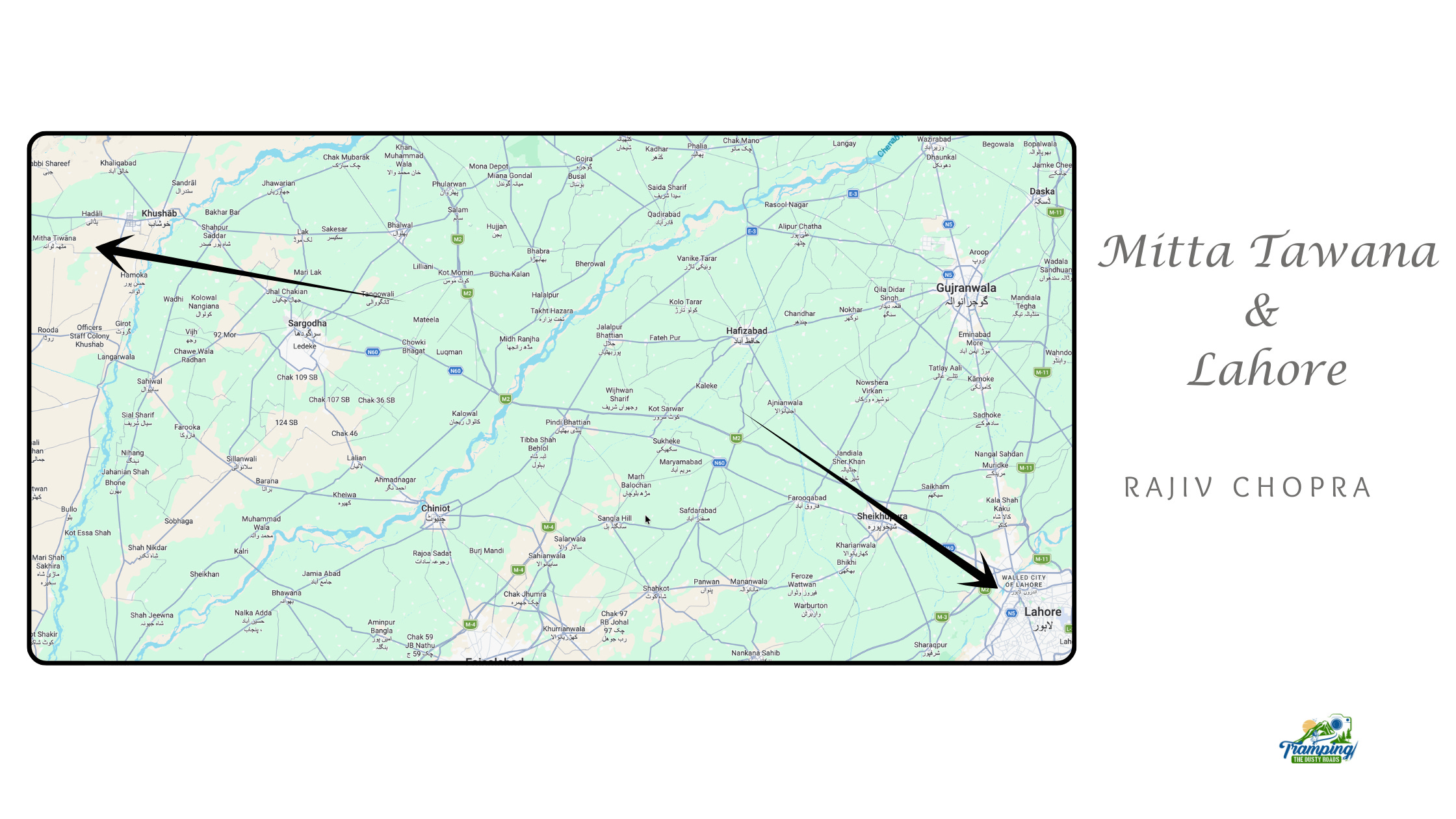
I read ‘Roots’ by Alex Haley when I was a teenager or, when I was in my early twenties – I don’t quite remember the exact time – but it is a book I ought to read again. The book centers around Alex Haley’s search for his family’s roots in Gambia. As people migrate from one place to another, the memory of old traditions fades, and they plant new seeds, which take root and germinate. New traditions are born, and old ones die.
Humans have migrated for thousands – possibly millions of years – and, although I have not yet studied the history of migration, I can state with confidence that these migrations have changed us more than we realize. I keep discovering how Persian and Arabic words slip into our language.
What happens when migration is forced? Forced migration causes problems and stress, and it is impossible to predict what happens in the future. The Americans and Israelis are trying to force the Palestinians out of their land, their home for several thousand years. While I detest what is being done to the Palestinians, I also cannot predict what is going to happen in the decades that will follow.
India’s Partition forced millions of people into what is sometimes called the largest forced migration in history. We are still dealing with the consequences of this forced partition.
I have not traveled to Pakistan, but I hope to visit in the next several years. I’d like to travel to Mitta Tawana, Lahore, and the Khewra Salt Mines, and Jhang,
My mother spent most of her childhood in Lahore and part of her growing years in the Khewra Salt Mine area. My father-in-law is from Jhang, and my father was born and raised in Mitta Tawana. I discovered that the family of the late writer Khushwant Singh is from Hadala, very close to Mitta Tawana. I also learned that part of Khushwant Singh’s ashes have been scattered or buried in Hadala. It is not just me who still has a strong attachment to his roots; since Khushwant Singh was born before the Partition, his bond with his roots would have been stronger than mine.
My kids are two generations away from Mitta Tawana, Lahore, and Jhang and have no emotional attachment to their roots. They will build new traditions.
I will write about Jhang in December, my wife’s birthday month, and focus on Mitta Tawana and Lahore for now. A Pakistani friend sent someone to make a video of Mitta Tawana, which helped my father ‘see’ his childhood home one last time. The same friend sent me many photos of Lahore, reviving happy memories for my mother.
So, let’s dive into Mitta Tawana and Lahore.
Mitta Tiwana
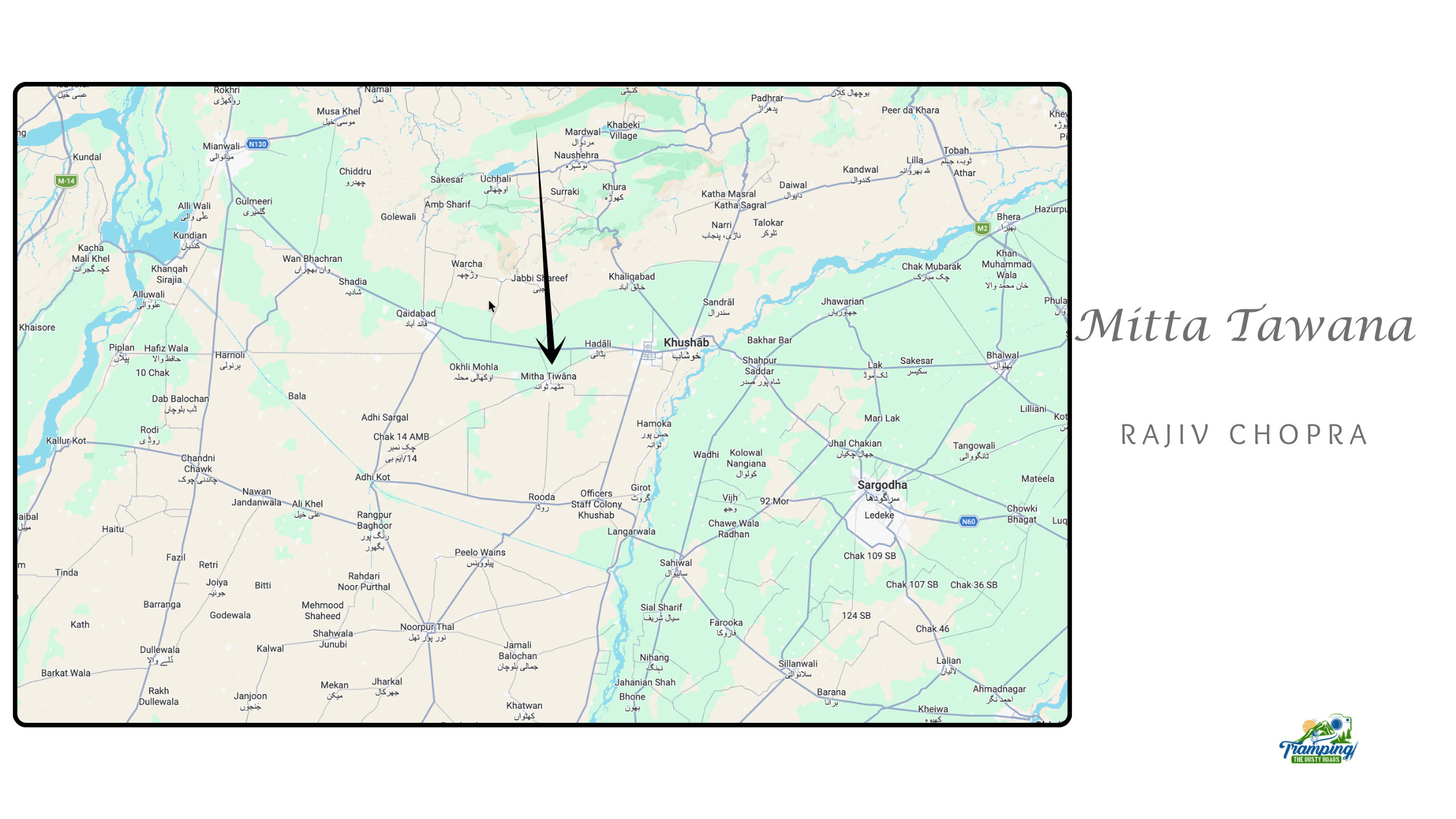
Mitta Tiwana used to be part of Sargodha District but is now part of Khushab District in Pakistan. The Thal Desert lies to the west, but the town is close to the Jhelum River. The border with Afghanistan is about an eight-hour drive from Mitta Tiwana.
While Mitta Tiwana (and Hadala) is an insignificant town today, it was home to the Tiwana Clan and probably gets its name from the clan. The Tiwana clan was a prominent landowning family who built the fortified towns of Mitta Tiwana and Nurpur Tiwana soon after the Mughal Empire began its 150-year-long implosion.
The town’s fortifications were strong enough to make the Sikhs feel threatened, and in 1816 CE, Maharaja Ranjit Singh sent his forces on a punitive expedition into the town. It appears the Sikh army under Diwan Chand kept sinking wells as it advanced, nullifying the strategic advantage the Tiwana chief, Tiwana Malik, hoped to gain by withdrawing toward the Thal Desert. Tiwana Malik hoped water shortages would force the Sikhs to withdraw, but his strategy failed, and the Sikhs overtook the area.
Mitta Tiwana became a British territory after the two Anglo-Sikh wars, and the Tiwana clan transitioned into becoming a Colonial elite. At their peak, they owned 100,000 acres of land. The Tiwana clan also supported a private army – the Tiwana Lancers – who supported the British in the Uprising of 1857-58.
One descendant of the Tiwana clan, Malik Khizar Hayat Tiwana, was the last Premier of the Undivided Punjab under British rule. I don’t know if the family played any role in the Partition, but I doubt it.
My father also came from a landowning family, but I doubt we have any connection to the Tiwana family. From the few pages my father wrote about his story, I conclude that we lost our landholding during the Partition.
My father did not learn Hindi, and Hindi is not my language, even though I speak it. My language is Punjabi. My father learned Punjabi, Persian, and English.
Mitta Tiwana had its moments in the sun, but now it is a tiny, insignificant town; still, when I googled it, I discovered there is still much to explore, but only those attached to the town’s history will bother exploring its remains.
Mitta Tiwana is a young town, founded in the mid-17th century.
Lahore
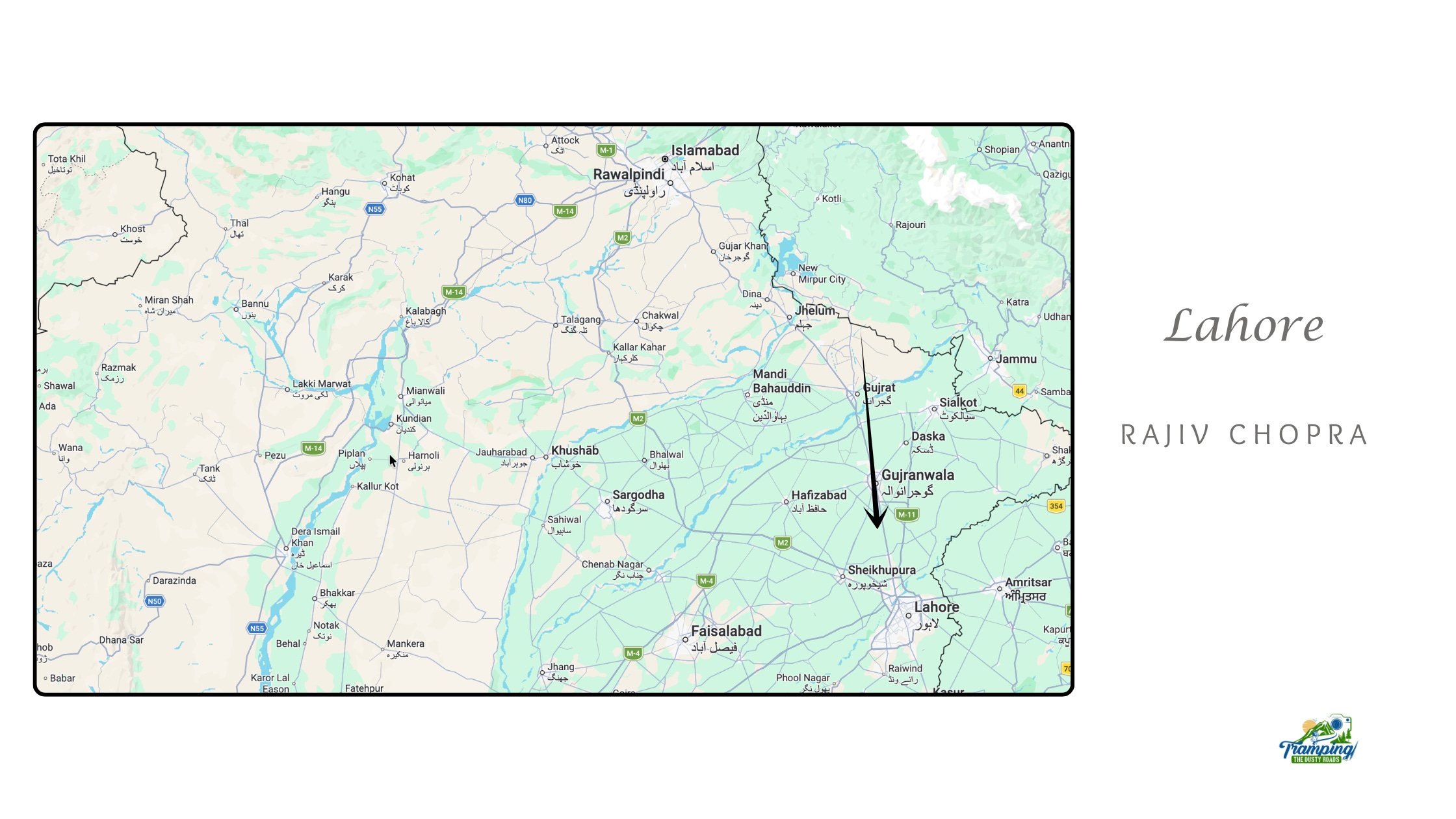
Lahore is another matter altogether. According to mythology, one of Ram’s sons founded the town, and I mean the same Ram from the Ramayana.
Lahore is a middle-aged town, with about one thousand years of recorded history, from the early days of the Hindu Shahis, the Ghaznavids, and the Ghurids, before it became more significant under Mughal rule. The Mughal Emperor Jahangir is buried here, as is his favorite wife, Nur Jahan, and her daughter, Ladli.
Maharaja Ranjit Singh made Lahore his political capital in 1801, and after the first Anglo-Sikh War, the British stationed a resident in the town. Subsequently, the British turned Lahore into Punjab’s administrative hub.
Lahore has witnessed many battles: Mahmud of Ghazni’s capture in 1021-22; Muhammad of Ghor’s attack in 1186CE; the Mongol raids in 1241 CE; Timur’s raids in 1388-89; Babu’s raid in 1524CE; Nadir Shah in 1739 CE, and Ahmed Shah Abdali in 1752 CE. Then, the Sikhs took the city as their own. Losing Lahore was a deep, emotional loss for the Sikhs.
And now, it is part of Pakistan.
According to a friend’s mother, those who have not seen Lahore have not truly lived. Lahore is just shy of 50 kilometers from Amritsar, yet it could also be 5,000 kilometers away.
More than its military history, more than its political history, Lahore’s importance lies in one simple fact: Lahore has been the cultural capital of Punjab and, if I believe my Pakistani friend, it still is.
Whether it is poetry, food, literature, historic bazaars, its Mughal architecture, or its Sikh heritage, Lahore is unique. I am not writing this piece to tell you where to go if you are in Lahore. I will do that whenever I visit the city.
The bridges we build. The bridges we tear down.
The point of this brief post is to share facts about places tied to my family’s heritage and my cultural and historical heritage, and to emphasize the commonality between people on both sides of the border.
We share languages: Urdu, Punjabi, Sindhi. On the other side, they both speak Bengali.
The Punjabis in West Punjab love Baba Farid and Baba Bulleh Shah, as do we. We eat similar foods. People will form bridges. Politicians break them down. In our case, the British had no business dividing India, as they had no business creating a mess in other parts of the world.
Yashpal’s book, ‘This is not that Dawn,’ starts in Lahore before moving to India, and this setting is appropriate.
Whatever the cause, we are separate, and the forced migration has been apocalyptic.
I will visit these places one day, Insha’Allah. When I finally make the visit, I will write about my travels. But whenever I speak to anyone in India about my desire to visit these places, they all say one thing: that I will get a warm welcome.
Insha’Allah, it will happen.
PayPal
Stripe refuses to support Indians, so if you’d like to support me, click this button.
If you do so, then let me know, so I can add you to the list of founding members.
I like this post a lot because of how you mention how your mom grew up and lived in both a chhota (small) town, Mitta Tawana (somewhat near a desert and farther yet still closer to Afghanistan) and also in a bada bada (big, big) town, Lahore. You confirm the uniqueness of the poetry, food, literature, historic bazaars, Mughal architecture and Sikh heritage of Lahore. And interestingly you mention how a part of your family were landholders but that the landholdings disappeared (if I read right) right after Partition. I guess "forced migration" looks at this from the viewpoint of other more peaceful migrations. But the reason for the "forced migration" was that it was thought by the 3 leaders involved that it definitely would bring an end to sectarian violence. And it ended up unleashing a huge quick fire of violence in which almost 2 million Hindus, Muslims and Sikhs died. And that was all (basically) from sectarian hate. I am a total outsider about all this but bad enough that the British looted India throughout its occupation to the tune of $45 trillion if today's currency rates are applied. And then it seems to me, England surreptitiously arranged the forced migration so that Hindus and Muslims and Sikhs would blame each other for taking away what should have belonged to the other one. While the British took an incredible amount of wealth from India because 1), they wanted it and intensely desired it; both India and its wealth. Probably out of its extreme envy of India. And 2) they thought of themselves as superior to India. That England's 1,100-year-old culture is automatically superior to India's 10,000-year-old one. It's kind of like how America's spoiled bachelor's degree in computer science holders feel superior to the Indian graduate students who always go a few steps further for their master's and Ph.D degrees in computer science. If the educational system for a 400 million American population is considered not particularly rigorous and the educational system for India's 1.4 billon population is considered incredibly rigorous, who will high tech companies choose as the best candidates to hire to be overworked and under paid to take on the most difficult and complex high-tech positions? You may not agree with me, but I don't think we have progressed much at all beyond British superiority complexes, primacy of hate as more real and recognizable and usually displayed instead of love. And all the new hate, trouble and misery our children will need to endure if we continue blithely going along in the direction of this ever worsening really bad condition presently all over the world.