
Starting with Haridwar
The town just does not attract me. But, people love the place.

Haridwar does not attract me.
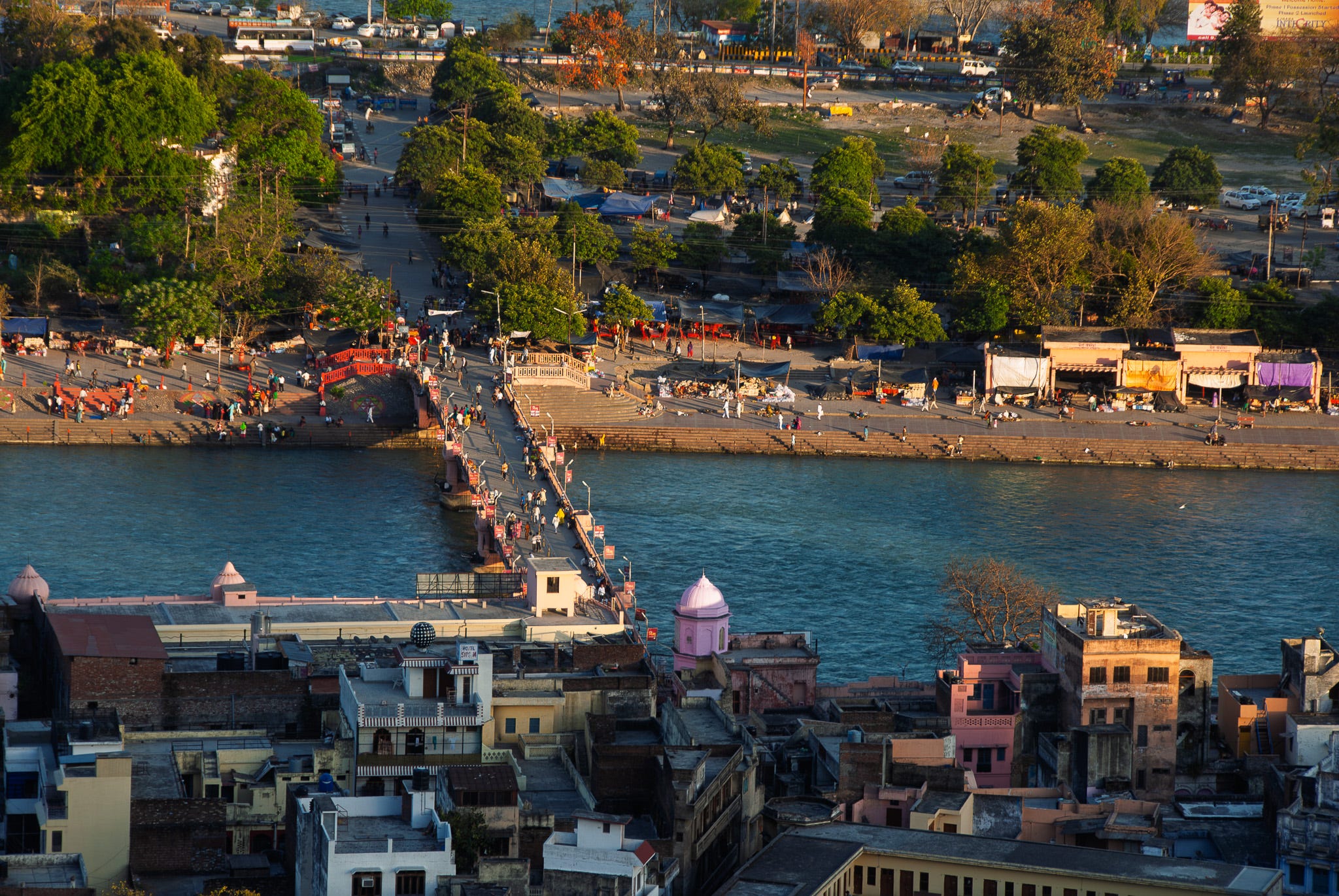
I don’t like Haridwar, and many people may wish to troll me for saying this. Not that I dislike the town: it is just that I don’t like it, and the town has nothing in it that attracts me. The ‘I don’t like’ exists somewhere in the gray space between indifference and active dislike.
Maybe I possess the sensibility of a block of lead.
Haridwar is a religious and now an industrial center.
Religious History
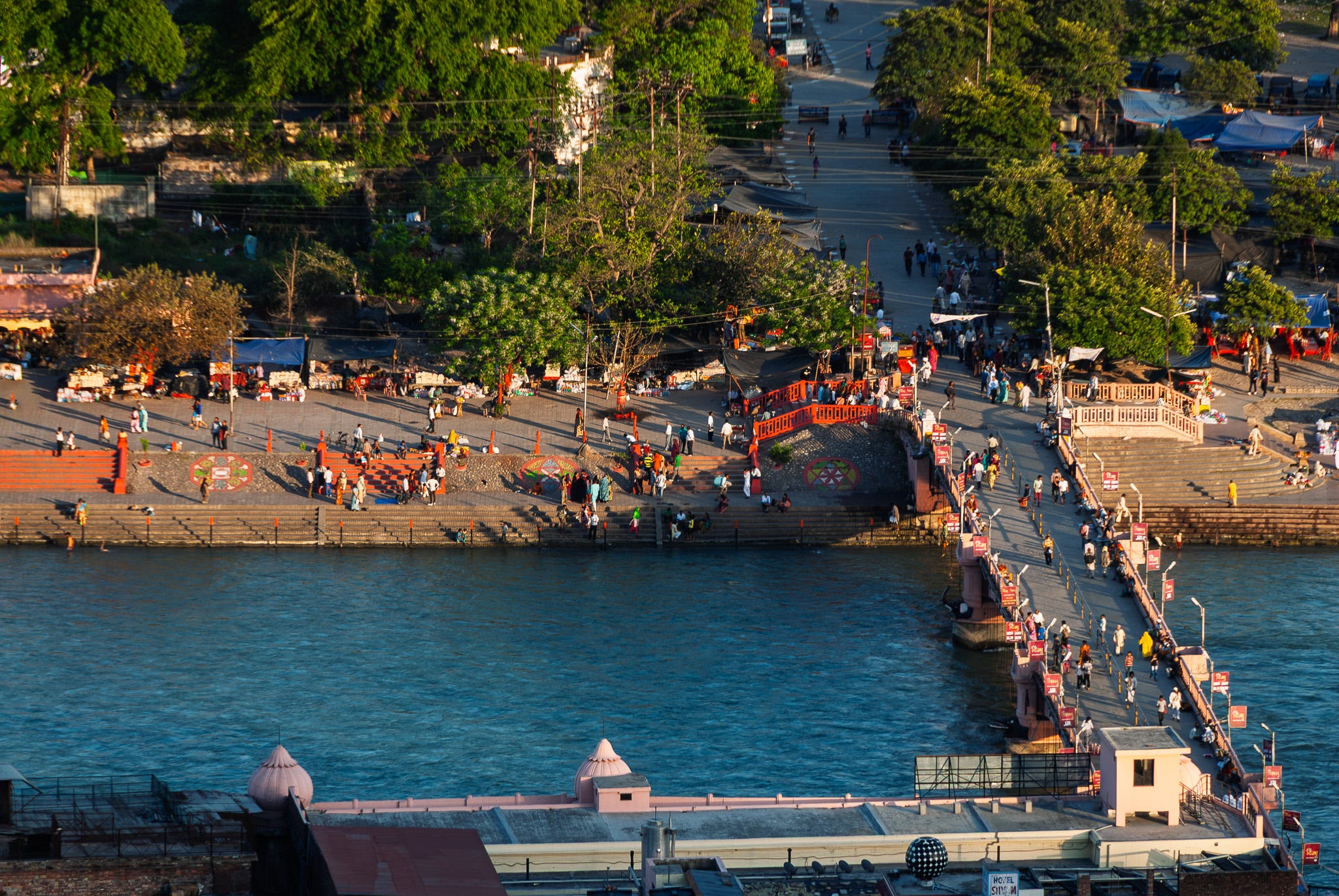
Shall we start with its religious role in India? People believe the Ganga starts its journey on the plains at Haridwar. I dispute this belief because, in fact, the Ganga meets the plains at Rishikesh, a few kilometers upstream. The name, ‘Haridwar,’ literally translates as ‘the door to god.’ However, belief is belief, and I do not wish to argue with those who believe that Haridwar is the place where the Ganga begins its journey on the flat plains of India.
The town had several names in the past: Kapila (associated with the sage, Kapila), Mayapuri (after the goddess Maya), and Gangadvara (the gateway of the Ganges).
Haridwar is one of the seven towns where, if you die and are cremated, you gain moksha (liberation).
I have found no evidence that Haridwar was ever militarily significant. Haridwar’s significance lies in its importance as a religious and trade center. Key developments in Haridwar’s history include the construction of ghats, temples, and pilgrimage routes in the Garhwal Himalayas.
The town boasts a few ancient temples: Maya Devi Temple (from the 11th century, dedicated to Shakti worship), Mansa Devi Temple (on Bilwa Parvat), and Chandi Devi Temple (associated with Adi Shankaracharya).
The other significant event in Haridwar is the Kumbh Mela, which takes place every 12 years. The other three towns that host the Kumbh Mela are Allahabad (Prayagraj), Nashik, and Ujjain. I remember being at the Kumbh Mela (or properly, the Ardh Kumbh Mela) in the early 1990s, and it was a dull affair. The main event used to be the daily evening aarti (prayer) at Har Ki Pauri. But over the last decade, religious fervor has gripped India, and these festivals have become crowded. Temple tourism is alive and well. Many of my friends who were quietly religious have now become more fervent, and their prayer meetings have become increasingly elaborate, with people performing dances and recitals, and men and women buying new clothes especially for festival periods. Solemnity and smug piety accompany them everywhere. Bhajan discos are now becoming popular: you are in God’s and the government’s good books if you pray well and flaunt your piety.
Industrial Development
Industrial commerce never runs far behind religious commerce. Industrialists and priests often develop a cozy nexus. Commercial development began during colonial India, when the British built the Upper Ganges Canal, creating one of the world’s largest irrigation systems. Over time, this activity helped develop agriculture and also led to Haridwar’s development as a technical and logistical hub. Subsequently, especially post-Independence, Haridwar’s industrial development continued. The first major public-sector company to set up a plant here was Bharat Heavy Electricals Ltd (BHEL), transforming Haridwar into an industrial and religious centre.
The continued industrial development has helped build peripheral infrastructure and has helped increase the town’s population. I call it peripheral infrastructure because there is little development in the main town, save for expensive hotels.
Yet, pollution always accompanies industrial development. While the waters of the Ganges are relatively pristine in the principal town of Haridwar, industrial effluents have poisoned the water downstream. I don’t know what the future holds.
And now we move on.
I was walking down the hill when I shot those photos using my Nikon D200. I developed them using Adobe Lightroom Cloud.
Interesting story about Haridwar. Haridwar sounds like an old town in New Jersey in India whose salad days were long ago. Sort of like Atlantic City where Ellen Burstyn as a character named Sally, burned her cosmetics on the beach in Atlantic City in a film called The King of Marvin Gardens (one of the real estate on a Monopoly game board). Ellen Burstyn, whose real name is Edna Rae Gillooly from Detroit, is now 93. And she would have burned her cosmetics as Sally on the beach in 1972. So I am glad you told us about Haridwar and I think you have told us about a few towns you like and why. I am looking forward to reading more stories about those although I am happy to learn about Haridwar.