

Walking down to the riverside
I am going to make this one a short article, which may surprise those who know me for meandering into all sorts of tangential tracts.
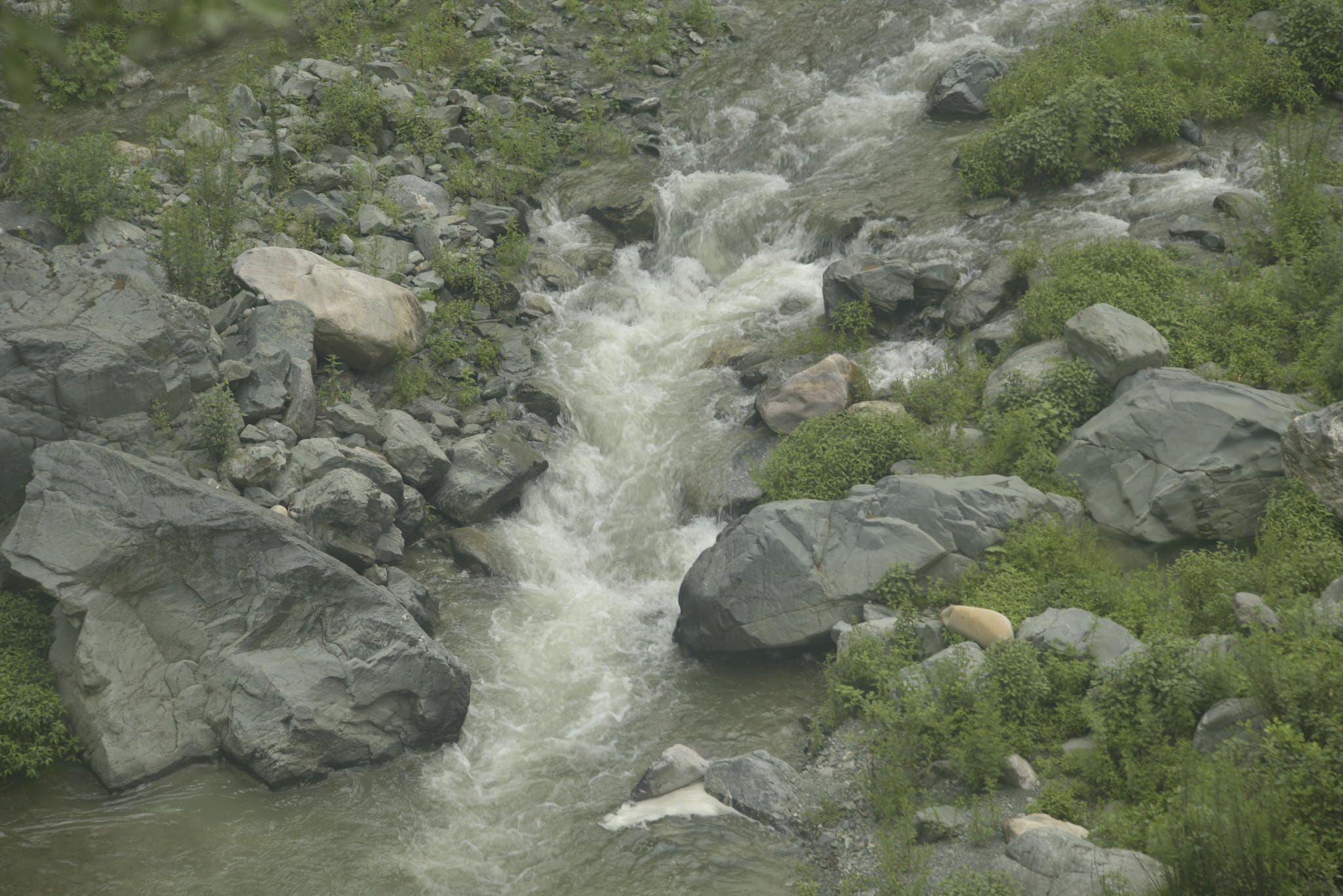
Whenever I am at the Silent Valley Homestay, I walk down to the riverside, cross the British-era bridge, and then climb the hill on the opposite side of the mountain river. These mountain rivers, or streams, are swift and have rocky beds. It is easy to slip on the riverbed and crack a few bones, so whenever I ventured midstream, I’d check with some of the locals first. I had no intention of cracking a bone and then driving the 300-kilometer distance to my home with my arm in a cast.
Those days, I drove a manual-shift car, which I subsequently exchanged for an automatic-shift car. Delhi’s traffic gets worse every year, and I remember driving my old car in half gear at times, or putting it into second gear and letting it move in neutral.
Walk down with care, especially when it’s wet.
If you wish to walk down to the river, it is imperative to explore the pathways and find a path with a manageable gradient. When it rains, even these tracks can become slippery, and although I grew up in the hills, nowadays I am not like a ‘human mountain goat’. Once, I was standing on the road, peering down a 60° incline, debating whether to climb down. I was wearing my fancy Timberland shoes and was about to make the first move downwards when a young lad carrying a sack yelled and warned me not to climb down. He climbed up in a pair of sandals, and his sack – filled with construction rubble – was heavy. His warning mortified me. My dreams of becoming a mountain goat vanished into the mist.
I used to meet a cheerful young girl.
I used to meet a pretty, good-humored young adolescent girl, carrying two crates of tomatoes on her head. My host told me each crate weighed 20 kilograms, but I think they weighed 10 kilograms each. If you assume my assessment is accurate, she still traipsed up and down the hilly paths – and they are steep in some parts – with 20 kilograms of tomatoes on her head, wearing only a pair of rubber slippers. I’ve met her in the rain and in sunshine, and each time she greeted me with a cheerful smile. I remember crossing paths with her in the rain and asking if she continued her walks with the tomatoes. Her reply, ‘Oh ya,’ was kind of singsong, as though carrying 20 kilograms of tomatoes in the rain was the most natural thing in the world.
She made that to-and-fro trip about four to five times a day. She’d walk down the hill with the tomatoes, cross the bridge, walk up the opposite hill to the road, where she’d deliver the tomatoes, walk back, and repeat the process about four or five times a day.
The way to walk in the hills is to walk slowly. There are two advantages to walking slowly. One, you conserve your breath and energy. Two, you pause to admire the scenery or to catch your breath. When you walk downhill, especially on steep slopes, you will lean backward and swing your legs slightly outwards to ensure you have a proper grip on the path. When climbing upwards, you must lean forwards. When you feel you need a short break, stop and stand. I’ve learned not to sit whenever I need a short break. Sitting will make you more tired. I’ve not studied how your muscles and tendons respond to constant sitting, but I can tell you this is the best way to do it, from personal experience.
Learn to walk in the hills. Sandakphu.
When I was twenty-two, a skinny friend and I decided to walk from Darjeeling (in East India) to a mountain called Sandaphfu. The distance was 70 kilometers: we had to walk down from Darjeeling and then walk upwards. Twenty kilometers down, and fifty kilometers up. My skinny friend tired easily, and despite my constant urging to keep standing, he kept sitting. In the end, his muscles gave out, and I almost had to carry him down to the valley, where we pitched a tent for the night. The next morning, we walked to the main road, about a kilometer from the riverside where we camped for the night, and hitched a lift back to Darjeeling. My poor companion was so tired that he barely made it to the main road, even though I carried his load, and mine!
I love sitting by the river, watching the light dance on the river, and the leaves of the forest. The wind sings, and I love the song. One path down to the river takes you past rows of stinging nettles. Luckily, I grew up with them, so I know how to minimize the stings. The nettles have beautiful red-green leaves and seem to invite unwary souls to caress them. Do so, or walk by carelessly in shorts, and be prepared to jump as the nettles sting you, leaving red spots!
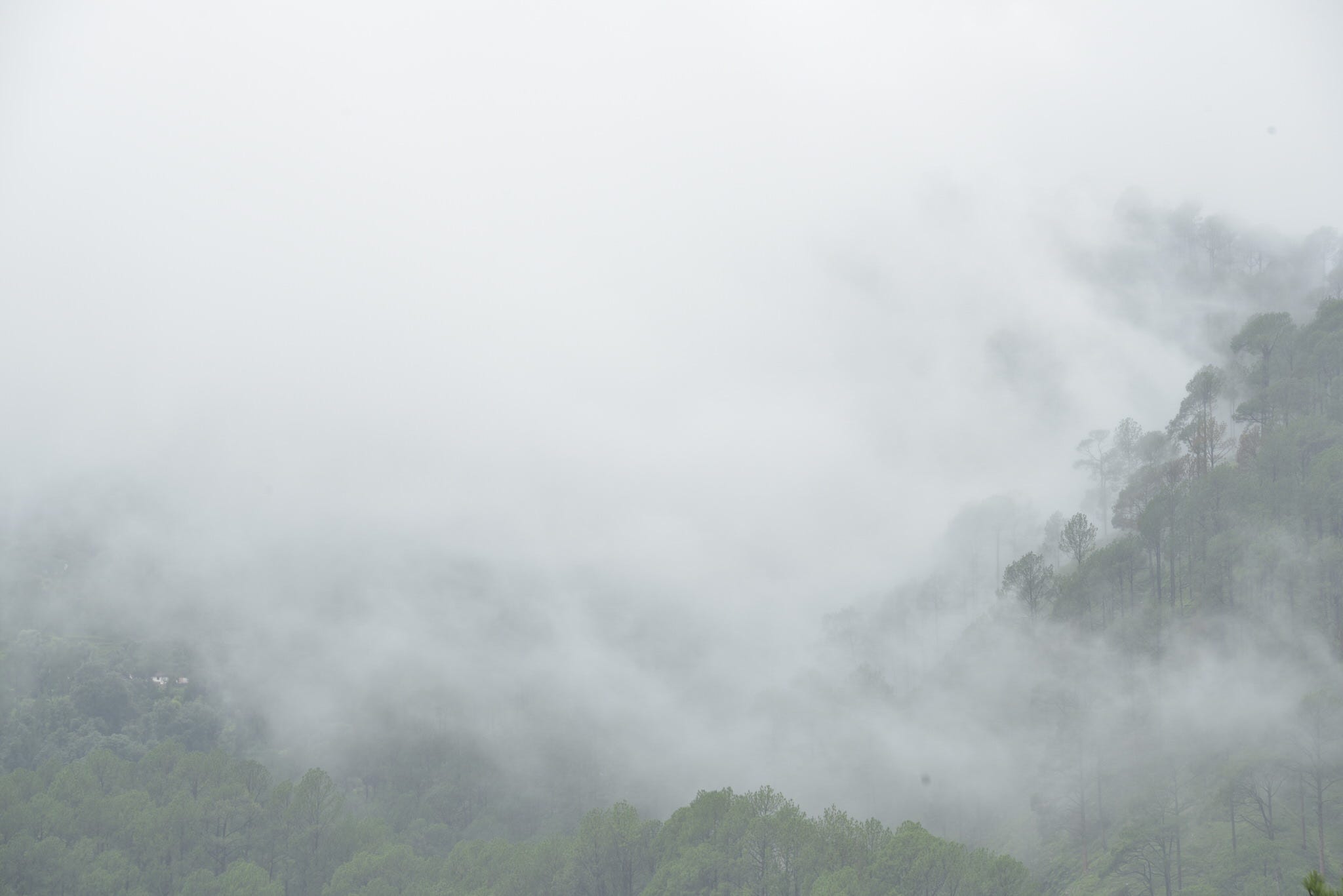
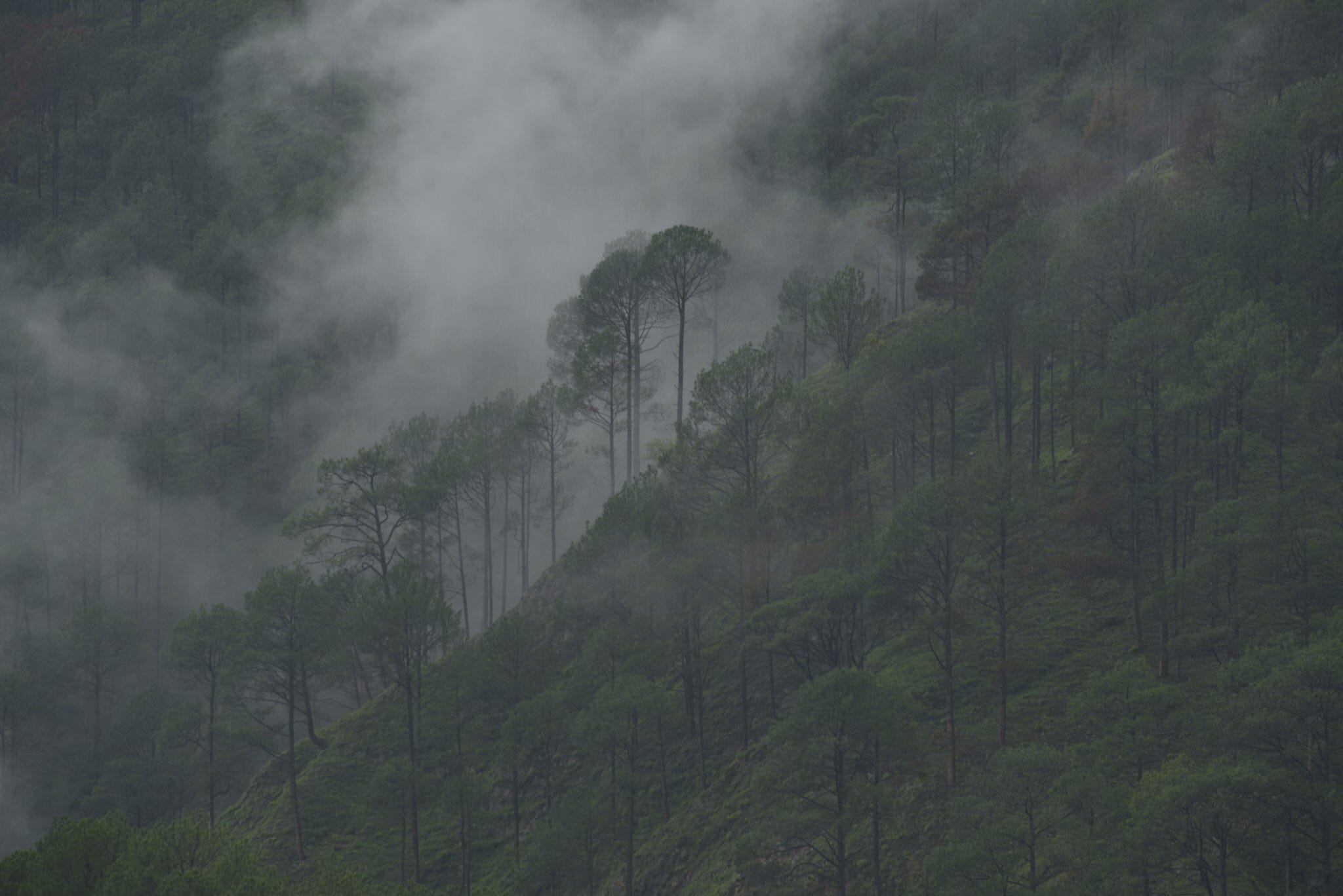
I’ve always loved the mist in the hills. Bhimtal is in the low hills, only about 1,000 (about 3,000 feet) above sea level. I do not classify Bhimtal as a mountain!
Misty Mountain Hop!
I don’t know if the Led Zeppelin song Misty Mountain Hop is about mist in the hills. It is a great song. Oh wait! I Googled the song! It seems that the song is a protest song. The Misty Mountains were a place of peace and happiness for Bilbo Baggins, and he wished to escape to this happy place. The group based the song on a real incident. A group of young people gathered in Hyde Park to protest for the legalization of marijuana, and the police broke up the protest.
Marijuana is integral to Indian culture. The Brits did not outlaw it, but they wanted to make money from the product. Don’t forget, the Brits forced the Chinese to buy opium that the East India Company grew in Bihar, India. The British government was one of the biggest drug and narcotics dealers in the world in the 19th century. Hoary companies like Jardine Mathiesen made their initial fortunes by trading opium.
We banned marijuana in 1985, under pressure from the Americans. Seriously, if the Americans don’t want to smoke marijuana, they should control Americans, not Indians!!
Anyway. That is Bhimtal!
We move on!


Stripe, sadly, refuses to support us Indians. So, if you’d like to support me, click the PayPal button below. And, let me know if you do subscribe!