

The final instalment of the ‘little history’ series.
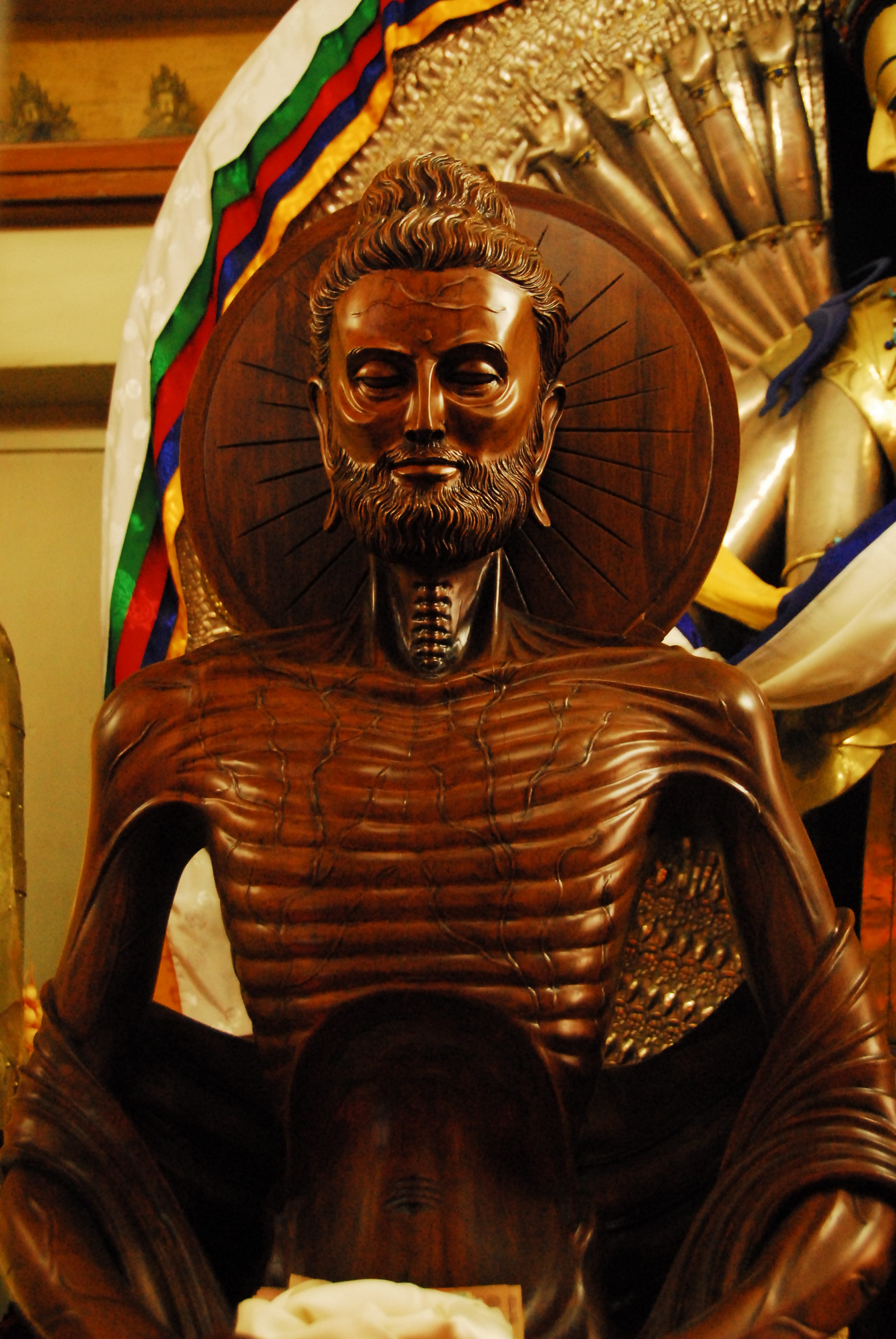
Now, I’d like to conclude this little history series by talking about the Gurkhas and the Tibetan Buddhists in Kangra. With all this stuff I wrote about the mythological origins of Kangra, Dharamshala, McLeod Ganj, etc., I completely forgot about the Buddhists and the Gurkhas and their long association with this region.
When I visited McLeod Ganj, I noticed the strong Buddhist presence and assumed it had begun when the Dalai Lama made McLeod Ganj his capital in exile. In hindsight, I acknowledge I was just being mentally lazy. I managed to escape the clutches of the ‘educated illiterate’ clan by starting to write on Substack (and on Medium) and by reading up on the places I visited and wrote about.
Let us start with the Buddhists.
The Old Days.
Let’s start with the Buddhists. My vocabulary increased by one word after I asked Google Aunty the meaning of the phrase ‘gelid region.’ The term ‘gelid region’ describes an area that is frigid and frozen.
In the old days, people described Himachal Pradesh and Kangra as a gelid region. These days, you’d describe Spiti, for instance, as a gelid region in winter. I have wanted to visit Spiti for a long time, especially because it is home to magnificent landscapes and Buddhist shrines such as the stunning Ki Monastery. If all goes well, I will make that journey in 2027.
Let’s return to the tale. Buddhism has a long, deep history in the region. I will digress again. I have just finished reading a brilliant book, ‘The Shortest History of Migration,’ in which I learned that passports and visas entered our world just after World War I.
Passports did not exist in the old world, facilitating considerable interaction between the people of Kangra and Tibetans. It is impossible to state with any certainty that Buddhism passed to Tibet from this region. However, I can say there was considerable interaction with Tibetans. When I was in Munsyari earlier this year, local people told me there used to be a lot of trade with Tibetans, and that some people in the area (Munsyari) are of Tibetan origin.
Legends state that the Buddha visited Kangra to introduce his teachings to the people. The term ‘Buddhism’ originated after he attained Nirvana. No. Buddhism is an English word, so I don’t know what the Buddha’s followers called themselves.
People say that the Chinese monk Xuanzang visited Kangra and Kullu around 620 CE and discovered that Buddhism was alive and well, finding almost twenty monastic centers in the area, with over 1,000 monks studying Mahayana Buddhism. You may still find some old Buddhist temples in this area, dating to the 8th or 9th century, all of which indicate that ‘native’ Buddhism may predate Tibetan Buddhism in Kangra.
Buddhism may have receded from the area around the 12th century onward. Buddhism moved from the subcontinent to China and then to Japan. Many years ago, when I was in Orissa, people told me that Buddhism threatened the livelihoods of Brahmin priests, causing fierce rivalry between the two and the eventual departure of Buddhism from the Indian subcontinent. When Buddhism arrived in Tibet, it gradually supplanted the Tibetan Bon religion; if you visit Buddhist temples in China, you will notice that Buddhism appropriated old Bon gods, recasting them as protectors of the Buddha, etc.
A spot of conflict.
I’d like to share a fascinating spot of history, one that I was entirely unaware of when I visited McLeod Ganj and Dharamshala years ago. The original - if we may use the term ‘original ’–inhabitants of this region belong to the Gaddi community, or tribes. These people are pastoralists and are indigenous to the region.
As Kangra has steadily become ‘Tibetanized,’ it appears that the original place names are being replaced with Tibetan names, causing people to forget the region’s heritage and creating tension between the communities. I have seen the militant behavior of some younger Tibetan-origin people in the area, and, as I write this, I’d like to point you back two paragraphs to the appropriation of the Bon gods into Buddhism. After my last visit to Kangra, I hadn’t thought of returning, but since we are planning a trip to Spiti next year, Kangra may once again appear on my horizon.
I won’t write more about the conflict because I have not done enough research. However, I’d like to point out that the British did not disturb the local culture when they established cantonments and administrative centers in the area: the Tibetans have caused more disruption than the British did, but you will not find any evidence of this tension on the surface.
Recent History.
Of course, some of you ought to ask the logical question: when did the Tibetans arrive in Dharamshala? To understand this story, you need to travel back to Tibet in 1950. Again, I won’t drill deep into the history, but if you want to do further research, I’d recommend a book I own: “Dragon in the Land of Snow,” by Tsering Shakya.
China invaded Tibet in 1950, and the world did not notice, like they did not notice (or care about) the Nakba. Most countries were recovering from the Second World War. China’s timing was perfect. The 1951 ’17-point agreement’ nominally allowed Tibet to remain autonomous but, in fact, it was the Chinese who controlled everything. The author writes that the Tibetans asked Nehru for help, but he naively referred them to the UN, as he had referred the Kashmir issue to the UN.
In 1959, the Tibetans revolted, and in March of that year, the Dalai Lama fled and entered India through Tawang in Arunachal Pradesh. The Dalai Lama’s escape and refuge in India have been a source of tension between India and China.
About 80,000 Tibetans followed the Dalai Lama into India. When I visited Tawang, people at the monastery told me that Jawaharlal Nehru did not want the Dalai Lama to remain in Tawang because of its proximity to the border and other reasons. Nehru offered him a place in McLeod Ganj, where he could set up his ‘Government-in-Exile.’
Most of us are unaware of history’s complexities and criticize Nehru for his mistakes. Not one of us honestly introspects and asks ourselves what we would do in his situation. We brush past the difficulties of setting up a new country, with the added complexity of dealing with the aftermath of Partition and integrating over 300 princely states into the Indian Republic.
We swirl our rum, whisky, or wine in our glasses, nibble on a kebab, sit back on our comfortable sofas, and talk wisely about the great decisions we would have made, while simultaneously being incompetent corporate leaders and running our businesses into the funeral pyre.
The Dalai Lama wasn’t in McLeod Ganj when I visited, so I missed the chance to have breakfast with him.
I will stop writing about the Buddhists here, because I will have enough time to discuss them in subsequent posts.
The Gurkhas
Now, I will turn my attention to the Gurkhas. Before I talk about Gurkha history in the region, I should answer one question: who are the Gurkhas? The Gurkhas have been integral to the British and Indian armies but, if rumors are true, our government – stupidly – wants to trim the number of Gurkhas in the Indian Army. The Gurkhas – or Gorkhas – are tribes of fierce fighters from the Gorkha region in Nepal. Gorkhas live in India today, and you will find them in Darjeeling, Sikkim, and also in many parts of the North-East. Gorkha is a district in Nepal, and its main tribes are the Thapa, Magars, Gurungs, and Rais.
You will refer to people from Gorkha as ‘Gorkhas’ and their culture as ‘Gorkhali.’ King Prithivi Narayan Shah united Nepal in the 1760s, and the Gorkhas made up a large part of his army. The British and the Gorkhas fought in the early 19th century, and their fierce encounters led to mutual admiration and respect. After the Treaty of Saugali in 1815-16, the British created ten Gorkha Regiments, which fought for the British in India until 1947. After Partition, the British took four Gurkha regiments to England, and the remaining regiments (plus the 11th) formed part of the Indian Army.
The Gurkhas, like all humans, began their western expansion in the 18th century; their empire came to encompass parts of Kumaon and Garhwal (both districts in present-day Uttarakhand), and Kangra. If you click the link, you can see the difference between modern Nepal and the Gorkha Empire’s full reach. They haven’t disappeared, and even today, if you visit Uttarakhand and Himachal, you will meet many Nepali Gorkhas.
Their expansion finally ended in 1815-16 after the Gorkha War (Anglo-Nepal War) and the signing of the Treaty of Sugauli. Additionally, the Gorkha-Sikh Wars did not end well for the Gorkhas.
This history may give you the impression that the Gurkhas retreated from Kangra: not true. The British formed the 1st Gurkha Rifles, or the Malaun Regiment, which is still active in Kangra. The name “Malaun Regiment” comes from the Gurkhas’ defeat at Malaun Fort. I have no idea why they’d choose to remember the site of their defeat!
The word ‘malaun’ is also a Bengali insult which means ‘cursed’ or ‘deprived of Allah’s mercy.’ The word comes from the Arabic root, ‘mal’un,’ which further comes from the root, ‘la’nat’ meaning ‘curse.’ I will talk of languages and pidgin language at some point. We don’t use the word ‘la’nat’ much in modern India, but we who come from West Punjab (now in Pakistan) used this word regularly until at least a decade or so back. I am convinced that people in East Punjab villages (now in India) use the word. I grew up hearing people say, “la’nat ho tujh par,’ which means, ‘may the curses be on you.’
Arabic and Persian words have a long and deep presence in the Indian subcontinent, especially in the Punjab.
I will now end this series of very short histories and, after a brief polemic in the next post, I will move on to sharing my memories of my journey to Kangra.
I am attaching a link to my Ko-Fi Page, in case you’d like to support me there!