

“An ideal society should be mobile, should be full of channels for conveying a change taking place in one part to other parts.”
- Dr Bhimrao Ramji Ambedkar
Three views on immigration.
The last chapter of Chinmay Tumbe’s book, “India Moving,” contrasts three views on migration: Dr. Ambedkar, Mahatma Gandhi, and Bal Thackeray.
Dr. Ambedkar was the strongest proponent of migration, possibly because he was a Dalit, the community of ‘untouchables,’ who often had to move far from home to seek better opportunities. Dr. Ambedkar called Indian cities a ‘sink of localism, a den of ignorance, narrow-mindedness and communalism.’
Bal Thackeray was a staunch Maharashtrian. In the past, people from across the country went to Bombay and Poona to work. Bombay and Poona were magnets, drawing people from across the country, and Bal Thackeray could easily whip up jingoistic fervor among locals, claiming people from other parts of India were stealing their jobs and ruining Maharashtrian culture. Bombay and Poona have always been cosmopolitan centers.
Mahatma Gandhi was the strangest of the lot. A man who studied in England and worked in South Africa, he later considered the ‘growth of cities as an evil thing, unfortunate for mankind and the world.’
Cities are creating modern mini-villages.
Both Dr. Ambedkar and Mahatma Gandhi spoke different versions of the truth. Indian villages have been dens of ignorance, communalism, and patriarchy. Indian cities have become polluted and are also dens of ignorance, communalism, and patriarchy.
As Indian cities have grown and traffic has become unbearable, most people in Indian cities prefer to live in their immediate vicinity and venture out only when they have no choice. We have created pocket urban villages in urban centers, and people are increasingly happy to live in small areas.
People have been moving for centuries.
Early Indians.
Yet, despite the rise of urban islands, people have always moved. If humans hadn't moved, we’d all be living in Africa with our earliest ancestors. Research indicates that the earliest humans arrived in South Asia somewhere between 74,000 years BP (before present) and 124,000 years BP. The supereruption of Mount Toba in Sumatra occurred, but our ancestors appeared in South Asia before it.
I’ve often said that a civilizational relationship exists between Indians and Iranians and not between Indians and Israelis. Research also shows a ‘genetic gradient’ exists between Iranians and South Asians. It is also possible that people from Iran migrated southwards, helping to form or contribute to the rise of the Indus Valley Civilization.
Marriage fostered migration.
Many people believe that Indian villagers are immobile. They live and die in the villages where they are born, and Chinmay Tumbe’s book, “India Moving,” disputes this commonly held belief.
He wrote that South Asian women often marry outside their village and, when they move to their husband’s village, carry the story and culture of their home villages. Over generations, this creates a moving culture driven by marriage.
Caste also fostered migration.
Years ago, I read Romila Thapar’s book on the history of ancient India and, if memory serves, caste distinctions and the growing problems lower-caste people faced; caste then became a major force for migration. In the earliest days, it appears, caste mobility was prevalent. Migrating from your home village could help you change your caste in your new village. Over the years, caste barriers hardened, yet they did not stop people from moving.
The Scythians and Parthians also appeared.
As people became more acquisitive and royalty grew greedy, they sought to expand their territories and brought their people (warriors, nobility, poets, and mystics) to South Asia.
To illustrate, the Scythians were probably the first. The Indo-Scythians, or Indo-Saka people, settled in modern-day North India, Pakistan, Afghanistan, Iran, and beyond. They arrived from Central Asia and established themselves between 150 BCE and 400 CE. Then came the Parthians. A branch of the Parthian, or Arsacid Dynasty, called the Pahlavas also popped into South Asia to say hello!
Once again, their presence proves my statement: our civilizational relationship with Iran/Persia is deep.
Arabs from West Asia began visiting the shores of Kerala around the 6th century CE.
Movements have happened for centuries.
The Chola kings of South India sent their representatives into South Asia. Bali's strong connections with modern Hindu beliefs are no accident.
The Chinese traveled to Nalanda for almost five centuries.
The Mamluk Queen, Razia Sultan, fell in love with her Abyssinian slave. The great general, Malik Ambar, started his life as an Ethiopian slave. Research indicates that Begum Hazrat Mahal, one of the great – and incredibly intrepid – queens of India, began her life as a slave. Her father, it seems, was African.
Hazrat Mahal is one of the ghosts I intend to chase, the others being Chand Bibi, Dara Shukoh, Razia Sultan, and Malik Ambar.
Babur himself had Mongol and Uzbek blood, if you like that expression, and during the Mughal Empire's heyday, people from across Central Asia mixed with locals in the bazaars.
I don’t want to launch into the benefits and problems of migration, but I will point you to an excellent book, part of the ‘Shortest History’ series: The Shortest History of Migration, by Ian Goldin. It appears that humans introduced passports to the world only after World War I. The rise of nationalism and the rising shrieks of self-serving politicians threaten to stem humanity’s natural flow. It is worthwhile remembering that Europeans pushed Native American Indians out of their homes, as they are doing to native Palestinians today.
Three Movements.
Let’s talk about three movements.
The first is migrant labor.
While I have been critical of the Western world for their current hysteria about migrant workers, we Asians are also guilty of the same behavior. The Japanese are notorious for their insularity, as are the Koreans; I read that Koreans now allow migrants to fill growing vacancies in menial work. My ex-boss, a Korean, typified the insular mindset of many Koreans, stating that a child born of mixed parentage is not Korean. There is no such thing as a half-Korean: you are either a pure-bred Korean or you are not a Korean.
Farmers in Punjab depend on migrant labor from Bihar, and migrants from Bihar and Uttar Pradesh have taken over taxi-driving. Migrant workers are indispensable for construction work across the country. Yet we treat them like vermin and refuse to acknowledge how much of our daily lives depend on their quiet work in the background.
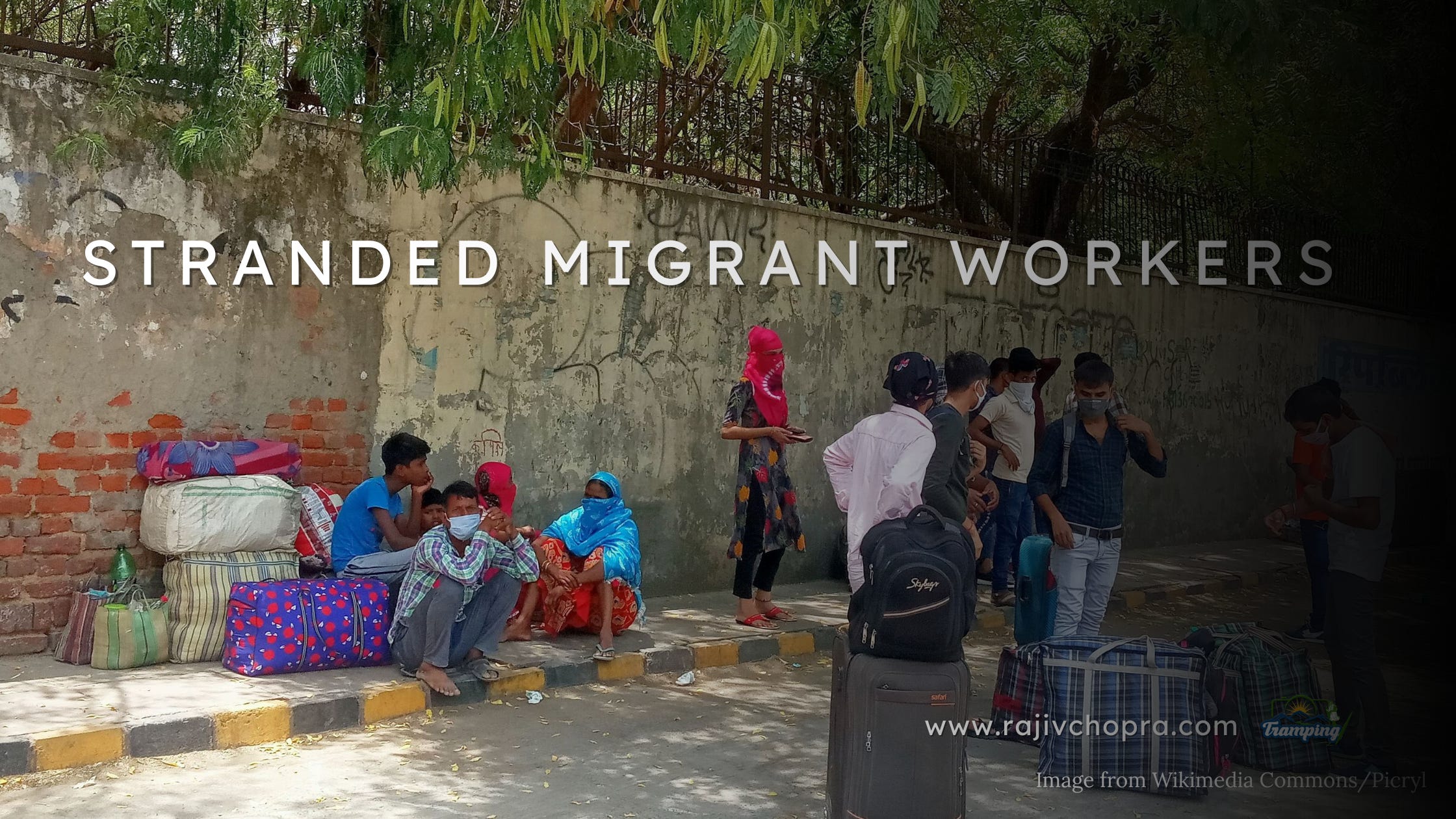
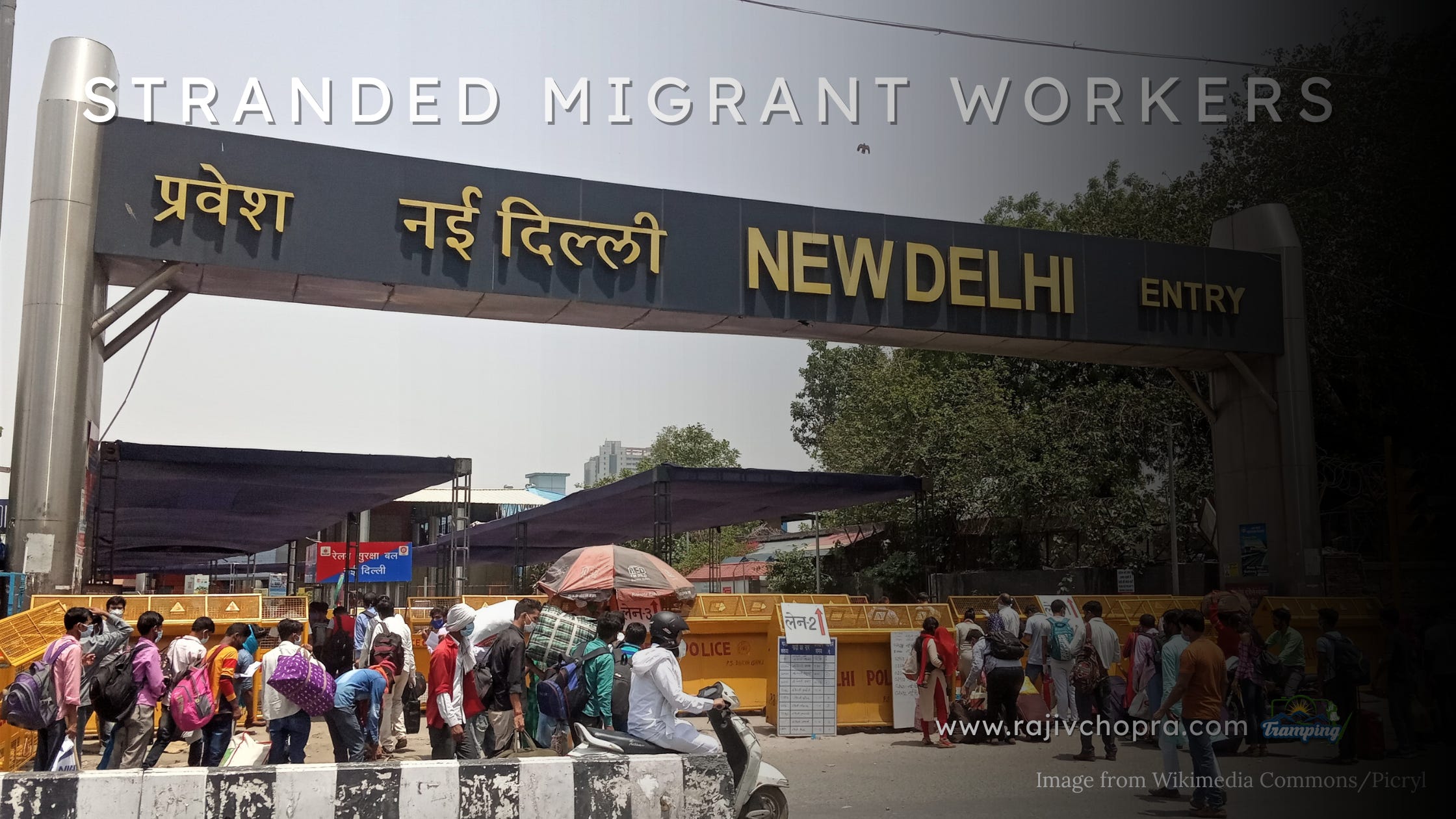
The COVID pandemic demonstrated our despicable attitude towards these people as we watched police officers and citizens mistreat them – even spraying them with bleach- as they walked over 1,000 kilometers back home to their villages.
In Delhi's National Capital Region, we depend on Bengali maids, drivers, security guards, etc. Even though we depend on them and ‘look after’ our personal security staff, we brand large sections of them as Bangladeshi.
Finally, people from northeast India are migrating to various parts of the country to work. We often call them ‘Chinki,’ which is a gross insult, and regard the women as ‘easy game.’
The point I want to emphasize with these three examples is that migrants often fill jobs locals don’t want. Then, sometimes they stay on and contribute to cultural and culinary diversity.
Would it be fair to say that, even though migration has undeniable benefits, when the number of migrants crosses an invisible threshold we deem frightening, our tribal instinct kicks in, and we say our ‘cities and villages and streets are just not the same anymore’? We fear those who look different, speak differently, wear different clothes, eat different foods, listen to different music, etc. Despite our technological advancements, we are, essentially, tribal people.
Listening to politicians and businesspeople like Musk ought to alert you to the simple fact that we are tribal people.
Historic Migrations.
I’d like to talk about Delhi now. Some say that the earliest inhabitants of Delhi populated the region about 5,000 years ago, drawn here by the Aravalli hills and the Yamuna River. One story says the city was named after a fabled king, Raja Dilu.
As we enter the age of history, those familiar with Delhi’s story will agree that the city became a ‘Rajput’ city. The Tomar Rajputs established their capital at Lal Kot, in South Delhi. Little remains apart from the walls, about 1,500 years old, but I bet the inhabitants' culture reflected that of the Tomar Rajputs.
Then came Mohammed Ghori and the Delhi Sultanate. Delhi’s culture became more Turkic-Afghan. Babur and the Mughal Dynasty followed, and Central Asians, Iranians, Afghans, and Rajputs created the city's Islamic-Rajput culture. The British added some flair to the city, but I don’t believe that they had a lasting impact.
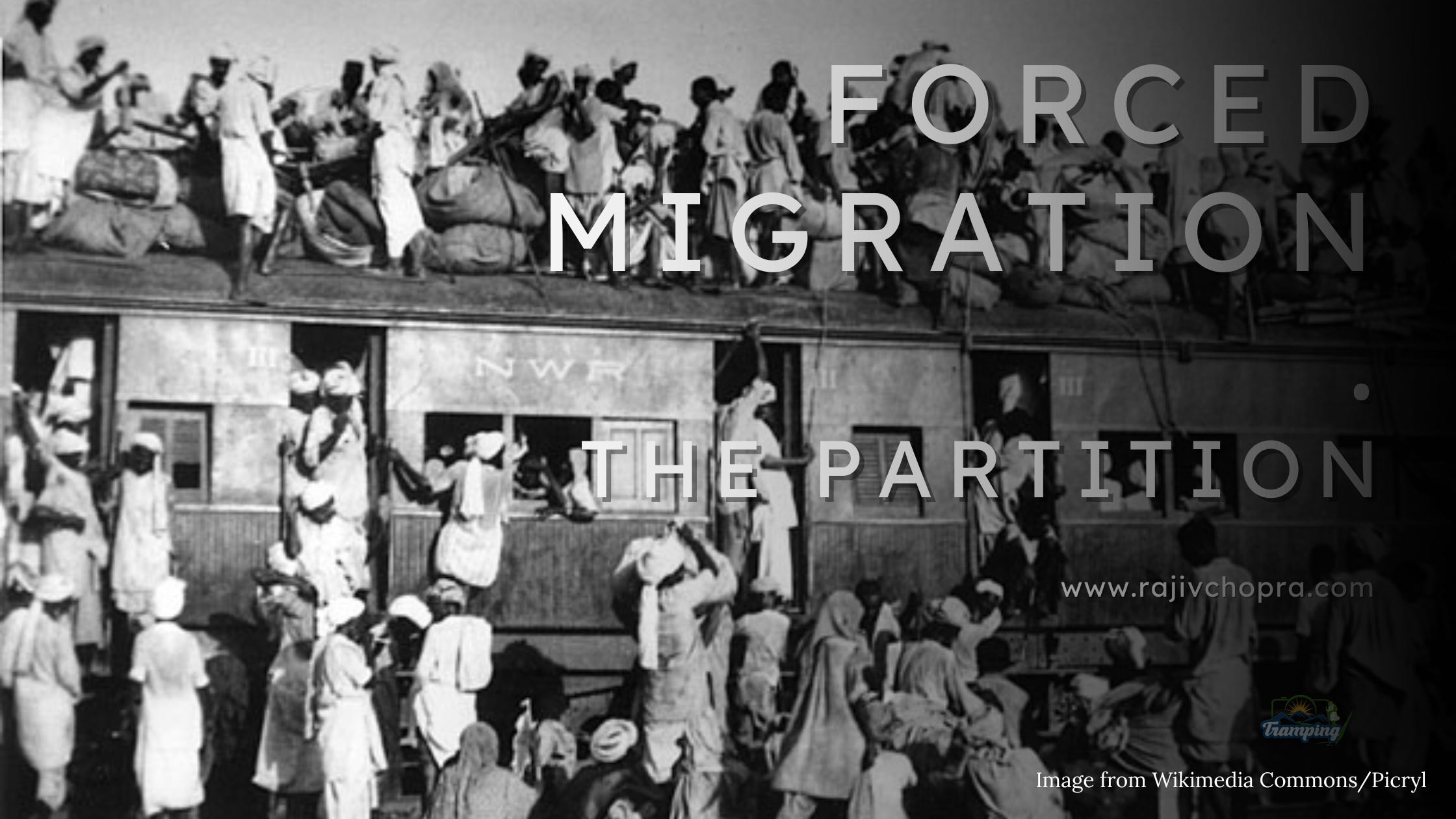
The Partition: Forced Migration. And, Manmohan Singh’s reforms.
The next major shift came during the Partition, when the chaos that followed changed Delhi’s culture. Most of South, West, and East Delhi became middle-class Punjabi, with the Islamic core being confined to Delhi’s Walled City.
Urdu, which many erroneously believe is an Islamic language, actually flowed from North India, where it was born, to Pakistan, where it is now the country’s official language.
After Dr Manmohan Singh opened up India’s economy, Delhi’s culture changed again, and Delhi is now a smorgasbord of people from across the nation.
Dr Manmohan Singh’s reforms affected India another way. Prior to 1990 CE, a strong North-South divide existed in the country. It has not disappeared, but it has softened and has been replaced by another divide.
About four decades ago, North Indians strutted. Punjab was arguably India’s richest state, and most North Indians considered South Indians to be backward.
The coin has flipped, and people in South and West India are richer than those of North India, and they now consider North Indians to be uncouth, uncultured and violent.
People move in search of better livelihood.
Manmohan Singh’s great opening has prompted people to move across the country, and the number of mixed marriages is increasing.
India is changing again. Migration is no longer limited to migrant workers; white-collar workers are moving across the country as well.
Indians are people in motion, moving across the country and sending money home; moving to other countries and sending money home; or moving to other countries and creating new homes in their adopted lands.
‘If it were not for migration, the British would not have created a strange dish called ‘chicken tikka masala.’ Our kebab tradition has its roots in Turkey.
The old belief that crossing the ocean (kala paani, or black water) causes you to lose your caste is, probably, fading.
Politicians and people like Musk may try to shove us into ‘pure boxes,’ but, like water, people will find ways to migrate and change cultures.
If you have been reading my McLeod Ganj posts, you will realize the town’s culture is now largely Tibetan.
Support me here on PayPal.