Wandering in Haridwar
Memories. Haridwar is a very Hindu town.
I have not been back to Haridwar in a decade.
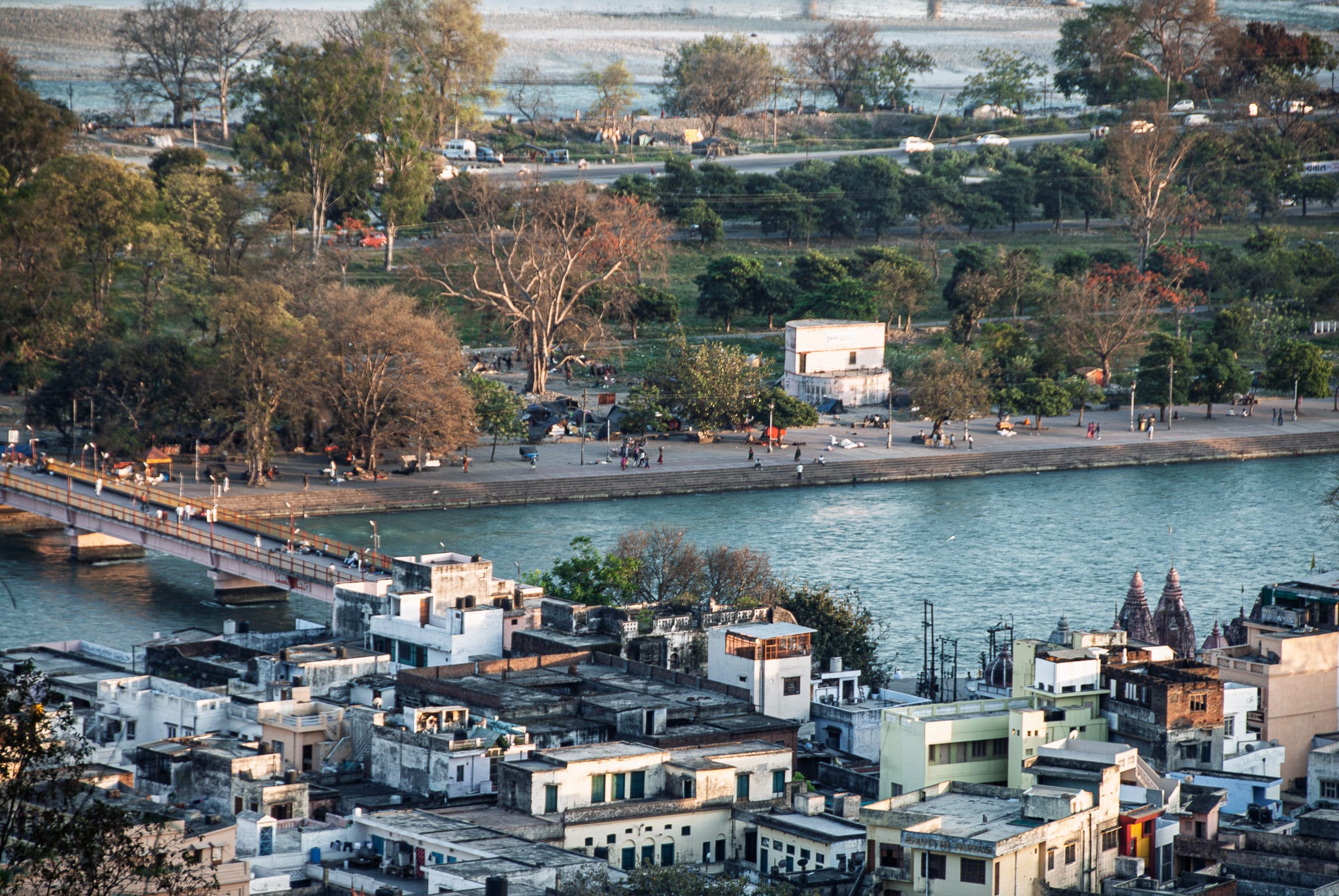
My last post on Haridwar was short but good enough for the subject at hand. I have not been back to Haridwar for about a decade. I may return to Haridwar in the future as a transit point to the hills. If my plans work, I will go on a road trip to Garhwal sometime next year.
My first visits to Haridwar happened a few decades back when I was working in the bakery industry and visited the town to sell my company’s products. I remember being distressed when I discovered that the town’s authorities had banned the consumption of meat and liquor. Yet, when I was in a small hotel–Haridwar had no decent hotels those days–I noticed a money plant growing out of an old “Old Monk” bottle. ‘
Old Monk Rum is alive and well!
Old Monk’ is a beloved brand of Indian rum, and once, when a rumor spread that Mohan Meakin (the brand’s owner) was considering withdrawing the brand from the market, my friends all predicted riots would break out across the country if Mohan Meakin were to withdraw Old Monk rum.
I am glad to announce that Old Monk rum is alive and well, and, since I am primarily a rum drinker, I am an ecstatic child.
Haridwar is mainly a pilgrimage town.
Even though industrialization is changing the landscape of Haridwar’s hinterland and suburbs, the town retains its essential character as a pilgrimage destination and as the point where the devout board buses for the ‘Char Dham Yatra.’ Many shops sell blankets, even in summer, and when I inquired, I learned that pilgrims buy blankets before heading out to the mountains. Many don’t have accommodation. Faith drives them, and they are willing to sleep in the open as long as they can complete the journey.
The four dhams, or holy places in Uttarakhand, are Yamunotri, Gangotri, Kedarnath, and Badrinath. The Yamuna River starts at Yamunotri, and the Ganges River starts at Gangotri. I do not wish to travel to Kedarnath and Badrinath. Not that I have a problem with the towns, but the crowds are increasing, and now you need to give an affidavit, swearing you follow ‘Sanatan Dharma.’
The philosophy of Sanatana Dharma is old and has its origins in the Vedas. However, the principles ask you to uphold virtues like “honesty, refraining from injuring living beings, purity, goodwill, mercy, patience, forbearance, self-restraint, generosity, and asceticism.” I copied this last from Wikipedia, but when you analyze the principles, all that Sanatana Dharma asks you to do is to be a good human and to uphold universal values of decency, which include not harming or killing other people!
Anyway, I believe that when we use the term ‘Sanatani’ and insist it is a ‘Hindu’ belief system without examining the larger context and meaning, we diminish the term. But that is my belief so bite me!
The water, the chains to protect people.
The Ganges, or a canal of the Ganges, flows through Haridwar. The water’s flow is rapid, and the authorities have laid metal chains along the length of the ghats. You must hold on to the chains unless you wish the river to wash you away downstream. Of course, if you allow the river to wash you downstream, you may reach earthly home quickly, or you may also arrive at your eternal resting place quicker than you had originally planned! Unlike prisons, where chains bind you, these chains protect visitors and bathers.
In those days, as I have said often, I travelled to the town, did my business, moaned about the forced vegetarianism and abstinence from alcohol, and left. The end. My routine didn't mean I didn’t get to know Haridwar; I only explored the business side of the town.
On my last trip, I wandered with the intent of exploring different facets of the place, but Haridwar never held my heart. The experience differs greatly from Benares, where I have spent many hours sitting by the river. Remember, it is ‘the same river,’ but the Ganges is much cleaner in Haridwar than in Benares. Even though Benares has lost some of its charm for me, it still attracts me more than Haridwar.
We took a cable car up to the hilltop but refused to enter the temple. My traveling companion those days was corpulent, and didn’t wish to walk up. Our hearts met when he declared his desire to skip the temple. He didn’t wish to get caught in a priestly trap, and neither did I. It took some convincing to get him to agree to walk down, but we walked down, and he was happy with the walk.
When you are on the hill, looking down, the town looks pristine, the water blue and pure, and the colors come alive. It is when you reach the bottom of the hill that reality punches your nose, and you interact with the crowds.
The devout and the thieves.


We stood on the bridge when the evening prayers at the main ghat–the Har Ki Pauri–happened. An authoritative voice over a loudspeaker reminded the pilgrims to mind their belongings and to safeguard them from thieves and pickpockets. Thieves must do their business, and a crowded prayer ghat presents them with ripe pickings. The pilgrims pray for their souls, and the thieves pray for a ripe harvest. Both pray but for different outcomes.
Later at night, we sat by the river’s rapid waters and gazed at families gingerly strip, grip the metal chains, and dunk themselves in the soul-purifying water. I sat by the riverside, camera on a tripod, and with a slow shutter speed, tried to create abstract patterns. The red light from the streetlights cast fascinating, abstract patterns on the water.
Then, we were done, and the demands of our stomachs made themselves felt. We encountered a few cops and VIP cars near a crossing as we walked to a small restaurant. The word ‘encounter’ has unfortunate connotations, also referring to extra-judicial police killings. We are still alive!
My friend used to belong to a few foodie groups in Delhi, and they recommended a restaurant for dinner, but when I saw the food, my saliva, taste buds, and gastric juices rebelled. Only my authoritarian streak beat my digestive juices into submission, and I forced the food down my reluctant gullet.
Morning photography in our pyjamas.
We woke up early the next morning. Our budget hotel did not offer breakfast, so I remember walking down to the crossing by the river in my pyjamas and Timberland boots. We sat on a stool, had some chai, and had a greasy breakfast.
While my heart ached for an egg, the greasy breakfast was just what a Michelin chef would have ordered. We stayed in our night suits and crossed the river to walk along the far bank. I thought this was the best part of Haridwar. Watching people bathe, pray, get their heads shaved, sell flowers, chat, sip chai or smoke a joint is just what any god would have ordered to make a perfect day. I sat on the steps, chatting with a flower seller, and by the end of our conversation, we had become excellent chums!
The two of us were dirty pigs. I remember we stayed an additional night in Haridwar, and slept in our dirty pyjamas. But then, as we figured, it was not our bed so who gave a damn?
Final explorations.
During the day, we explored a few temples in the area, wandered around the gullies, drank some lassi, ate a horrible lunch, and took some photos. Some of the old houses, with their old, rotting doors, fascinated me. Old doors, even when rotting, have always fascinated me. I remember meeting a chap at Jama Masjid, Delhi, while photographing his door almost a decade ago. We’ve been friends ever since.
A digression into the philosophy of doors.
Doors are portals to worlds inside and are portals to the world outside. Doors are privy to family histories, with laughter, tears, sadness, and joy. Doors have seen many people come and go, yet they stand firm, serving the family.
Unlike modern doors, which have a bland sameness, old doors have character. The original owners stamped their personality on the doors, and they put considerable thought and emotion into the door’s construction. Doors represent the family and are the first thing a visitor sees when they knock. Doors signal status, artistic intent, religious beliefs, and much more. Consider the contrast with our world, with bland, industrialized doors, especially in condominiums.
The signal is clear: we don’t give a damn about your family. Condominium makers and modern architects want to reduce to the lowest common multiple. Yet, no one likes to be reduced to the lowest common multiple of a herd, so you discover that, even in apartment complexes, the owners will embellish their doors with decorations, nameplates, plants, and other small pieces of decoration.
Tech giants and governments wish to strip us of individuality and seek to convert us to a bland form of Kissam Mixed Fruit Jam, but as long as people resist, humanity will survive.
I am not sure how I allowed myself to be sidetracked! But yes, that was Haridwar.
A final, memorable moment. Peace on earth.
One of my most memorable memories was watching the silhouetted shape of a man praying by the waterside. I am an animist, but I respect those with genuine piety, not those with showy, socialite piety. I sat for a long time, watching the man immersed in his prayers, and mentally I said, ‘Bless you. May you live in peace and happiness always.’


