
Wandering in Kankhal
Kankhal is a small, charming village near Haridwar.

Kankhal: A tiny, charming, dharmic village.
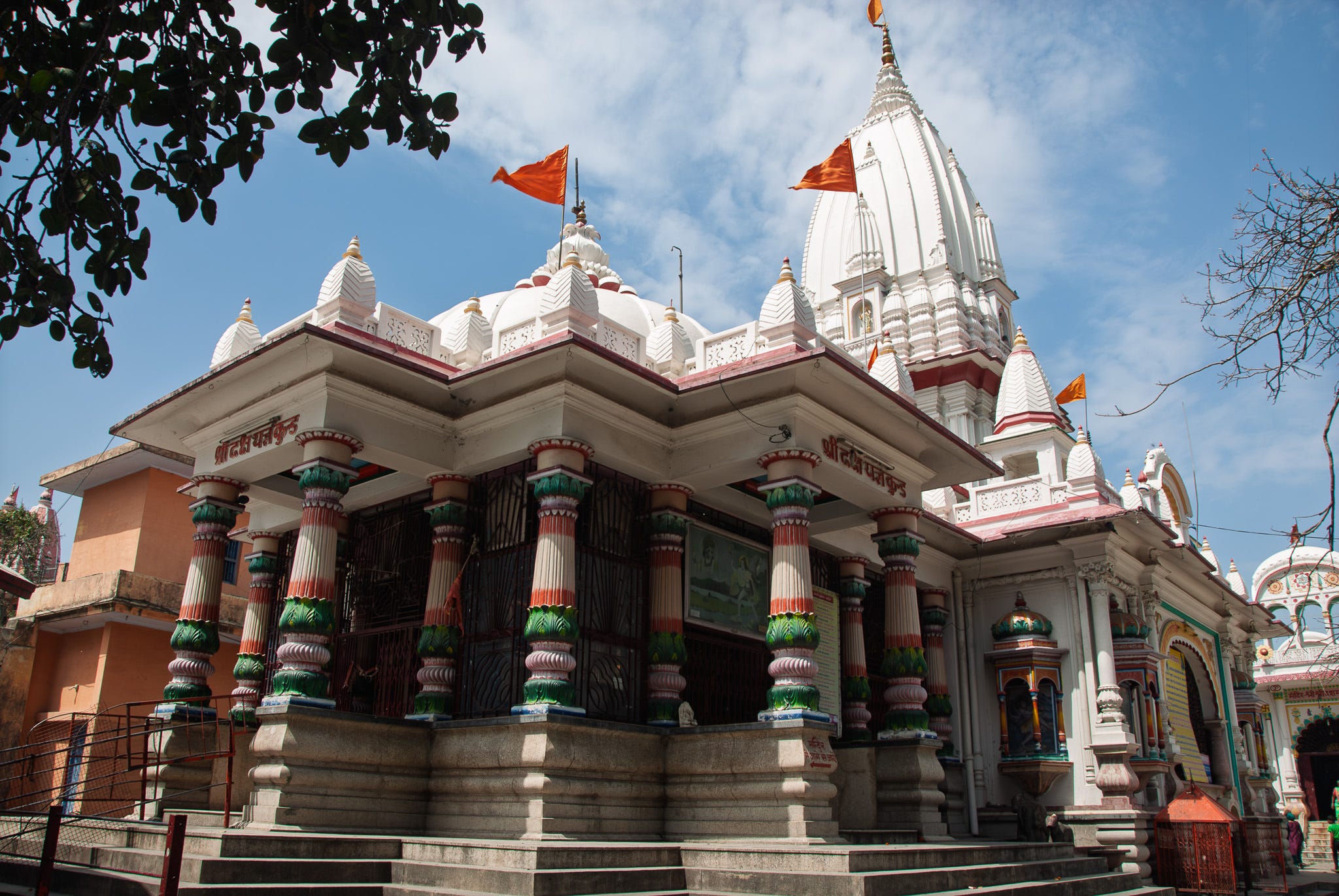
Kankhal is a small, charming village near Haridwar. I do not describe the place as a tiny village because it takes considerable effort from the villagers for them to have their village described as ‘tiny’ or ‘microscopic.’
Kankhal is just 3.5 kilometers from Haridwar. How long does it take to get there? The answer is simple: it depends. The time taken depends on your mode of travel, how crazy you or your driver is, the traffic at any point in time, and the season. If there is a religious festival ongoing, then the time to travel to Kankhal increases, and the cost skyrockets, especially nowadays, when Indians express their Hindu faith aggressively.
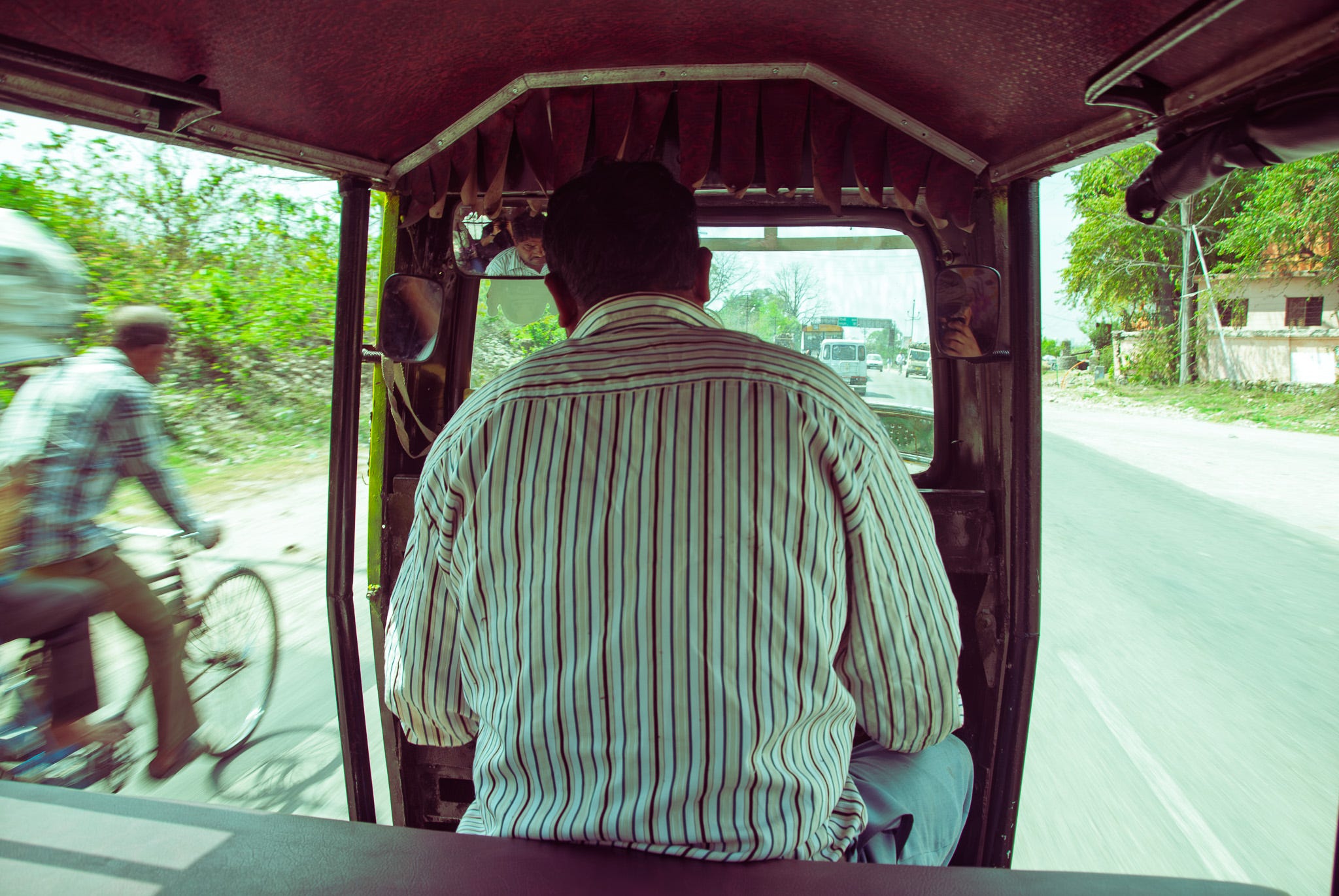
We hired an auto-rickshaw for the day, a practice I highly recommend. I have followed this practice on many travels, and it helps to move around. Trust me, you do not want to stand in the middle of the road when the sun is burning holes in your head, or when the rain is coming down, and you are cursing yourself for leaving your umbrella in your hotel room.
Many consider Kankhal to be a historic town (I think it is a little more than a village) and one of the ‘panch teerth’, or five holy pilgrimage spots, for those who visit.
A visit to the Harihar Ashram. Terrible photos


I really don’t remember why we visited Kankhal: we had time, and it seemed like a good thing to do. Apart from this reason, my friend wished to visit the Harihar Ashram, which houses a lingam made of 151 kg of solidified mercury (called ‘parad’). People believe that this lingam – called the Paradeshwar Mahadev – has great healing and spiritual powers.
The complex also houses the ‘Mahamrityunjaya Temple,’ which has a rare Three Mukhi Rudraksha Tree.
A few essential digressions!
Aryans
Now we have reached the point where I must digress again and give people some background information. Many believe that the Hindu faith stretches back about 10,000 years, but this belief is pure self-serving fantasy. The human transformation from being a hunter-gatherer society to a more settled, agricultural society only happened between 10,000 and 12,000 years ago. A few scientists also believe that it was when we started our journey towards becoming agronomists that we began manipulating our environment, but that is another story.
For now, let’s assume the Aryans entered the subcontinent, and many competing theories exist about who the Aryans were, whether they were a fantasy, and whether they brought their language, religion, and gods into the subcontinent.
Vedic & Hindu Gods
‘Rudra’ was one of the Vedic gods, one of the few who became a ‘Hindu’ god – Shiva. Rudra was the wild one, and some believe he represented the wild, untamed forces of nature. He, and later Shiva, wore a necklace of beads, called the ‘rudraksha.’ A rudraksha is a sacred, dried seed from the ‘elaeocarpus ganitrus’ tree, often called ‘tears of Shiva.’
Rudraksha Mala.
A ‘mukhi,’ or ‘mouth (I assume) is a line on the rudrakhsa, and the number of lines/mukhis can vary between one and twenty-one. I will not digress into a long essay on the rudraksha at this point and reserve the right to write an essay on the rudraksha a few months from now.
The ‘Mahamrityunjaya’ is a powerful Vedic chant from the Rigveda, dedicated to Rudra/Shiva, and seeks victory over spiritual death, fear, and bondage.
‘Maha’ means great. ‘Mrityun’ means death, and ‘jaya’ means victory. I have listened to the Mahamrityunjaya Mantra many times and used to chant it once upon a time. Even though I am not religious, I felt the power of the mantra whenever I listened to it or chanted it. This is not a mantra you chant when you are out dallying with someone or while on a lazy Sunday morning picnic. It is imperative that you prepare yourself and sit comfortably with a calm mind before listening to or chanting the mantra.
Now, I return to the tale. I took some horrible pictures of the Paradeshwar Lingam because I was worried that a priest would turn up and bawl me out. No one appeared, and the visit to the temple premises was calming and peaceful.
Back to the main topic. Kankhal.


Our visit to Kankhal was short – less than half a day. The Ganges river water flows by Kankhal. The locals told me that the government – I assume – had built a canal, diverting some of the Ganges river through the village. Diana Eck called India a ‘sacred geography,’ and there is much truth in this description. We remain obsessed with religion and, these days, religiosity reigns supreme. The surge of religiosity is brand new and bizarre. Indians are religious, but religion has (apart from some strange restrictions) largely remained a personal affair. Now, people wear their faith as a badge, displaying it on their shirts, coats, blouses, or foreheads.
We wandered amongst the temples situated on the banks of the waters. I remember squatting on the steps, enjoying the breeze in the shade of the trees. India is becoming hotter, and we are obsessed with cutting trees. Meanwhile, years back, I enjoyed the breeze and the shade.
People must survive, and the poor must pay a heavy price to survive. The poor pilgrims we saw could not afford even ten rupees as a donation to the temple. They brought their ten or twenty-rupee notes to the lady you see sitting at the table. She’d give them nine one-rupee coins for every ten rupees they gave her. I wager a bet that she had struck a deal with the temple administration and shared part of her 10% profit with them. I assume the pilgrims considered it a fair bargain, preferring to pay the conversion cost rather than part with ten rupees.
Since those days, the rupee’s value has fallen. Its path has entered a steep, slippery slope, and, even if you disregard unfavorable comparisons to the dollar, the fact remains that almost no one these days even recognizes a one-rupee coin. You can forget about the old fifty-paisa or twenty-five-paisa coins I grew up with.
All good things come to an end, and so did our short visit to Kankhal. Our gastric juices were calling, demanding attention. I remember that Kankhal had no restaurants back then, and the local food at the stalls looked forbidding. Yet we were starving, so we satisfied our hunger pangs with junk food – packaged cake and biscuits, before heading back to Haridwar to explore yet another temple.
Will I return to Kankhal? I don’t know. A friend and I are discussing a potential trip to Haridwar, so I may well revisit the old village. Time, as the old cliché says, will tell. Maybe, we will get something to eat!
https://www.paypal.com/ncp/payment/GL4PNF8T56TWG

This a great post about a small village called Kankhal about 3 and half kilometers or so from the larger small town of Haridwar in the hinterlands of India. Rajiv draws attention to the way how nature still remains in small villages like Kankhal. Your reaction to the Hindu mantra you discuss is amazing seeing as you describe yourself as not particularly religious. But I like the description of the wild god of the Hindu faith and that there are more Hindu pilgrims or Hindu people who celebrate their faith in trips to famous temples and earlier religious relics that have resonance for modern day Hindu believers. Also, your reminder that India is getting hotter and that more nature is being destroyed in the rush to build infrastructure in economically resurgent areas is very timely to prove that concern over global warming and how to curb it is very necessary. It is so difficult to retain and preserve what is important in the old India coupled with the perhaps somewhat transient benefits of new India huge economic and societal infrastructure growth in various areas.