
Wandering in Rishikesh: Part II
This is the end of the nostalgic look in the rear-view mirror

The rear-view mirror.
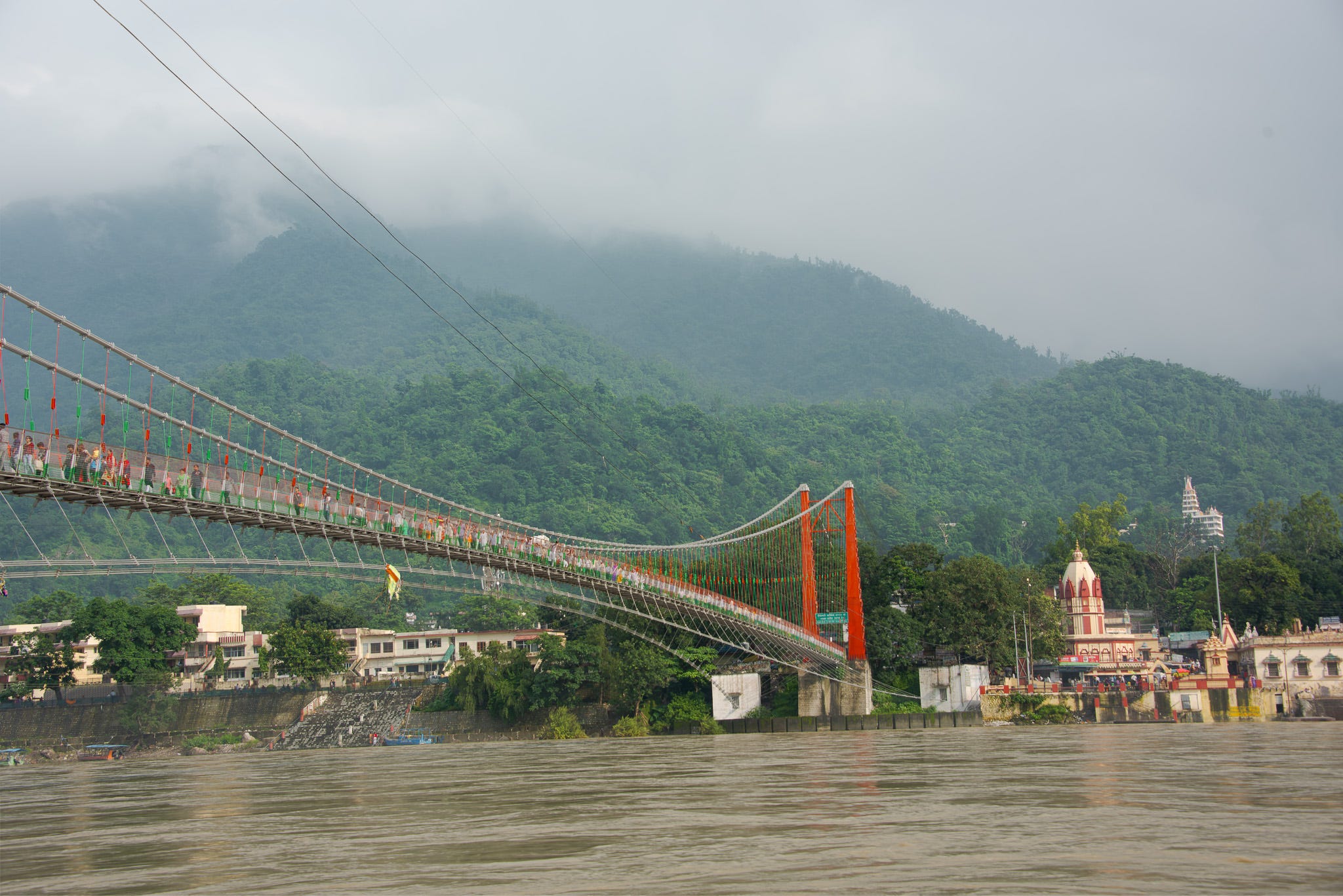
It is always tempting to look back in the mirror and sigh about the good old days, no matter if they were good or terrible. I always enjoyed my time in Rishikesh, but I will avoid the town during the monsoons.
In my last post, I may have spoken about how the rain could transform the road into a raging river but, I did not speak of the terrible humidity in August. The Southwest monsoon winds pass through India between June and September, and it is incredible how dependent we are on the monsoons for our water and food security. Any alien spying on our planet from afar would be constantly amazed at how, despite the advances in artificial intelligence, we behave stupidly. India has not made sufficient strides towards achieving water security. We don’t have enough water, and what we have is polluted. No wonder India may be the world’s cancer capital.
Rishikesh during the monsoons.
The humid weather during the rainy season is awful. I have almost zero tolerance for humid heat, and any alien spying on me will shake its head and declare me insane.
The rain washes the air, making the sun’s rays harsh. Steam seems to rise from the ground, and the river adds to the humid heat of Rishikesh in August. I opted to stay in the cool confines of our cheap hotel and thanked anyone who was to be thanked for the working air-conditioner. I am spoiled.
Near the Beatle’s Ashram
One morning, we walked along a beautiful, shaded path to the Beatles’ Ashram. And, when I speak of the shade, I refer to the tall trees on either side of the path. It is possible that the authorities have applied tar to the path in the intervening years, and if so, it will be a pity, as marauding cars will then tear along it. That day, however, we walked. A few cars – jeeps – passed by at breakneck speed, but there weren’t many. “Development” does not always bring pure joy to the world. When I was growing up in Nainital, we hardly saw any cars in the town. Everyone walked. Now, you have to keep hopping out of the way of crazy drivers, and few people walk unless they are on the upper roads.
We saw the Ashram from the outside – I had no intention of paying to enter. From what I could make out, there were a few abandoned buildings and ‘pods’ inside the premises. People told me that Donovan and the Beatles would sit in the pods and meditate. Maybe they got stoned before their meditation sessions, or maybe they meditated sober a few times, and meditated while stoned on other occasions, and gathered at night to discuss the two experiences. I believe that Donovan wrote ‘The Hurdy Gurdy Man’ when he was stoned.
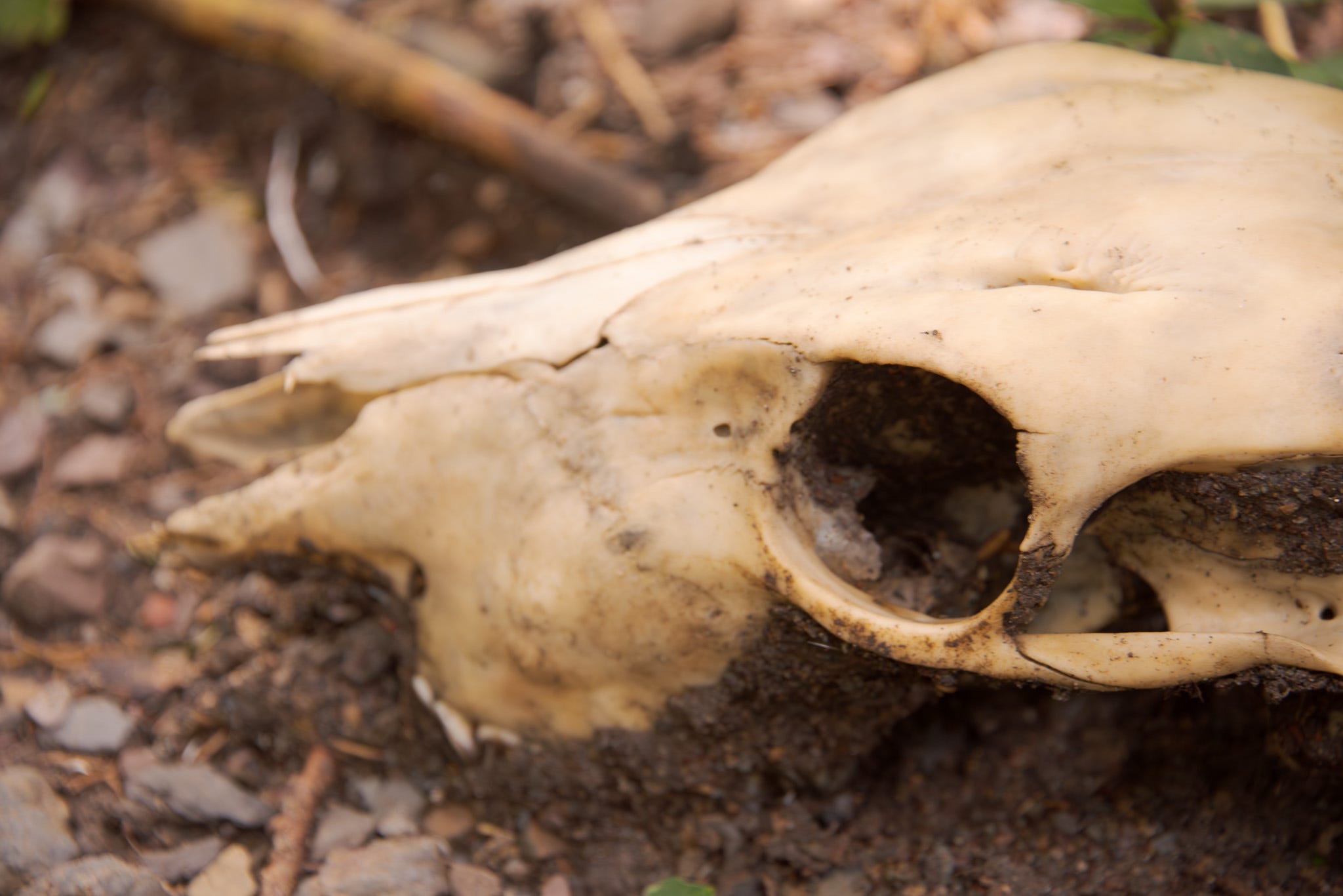
We had to turn right from the main pathway to reach the Ashram, and I darted into the woods, overcome by curiosity. Or maybe the sight of a few bones and skulls pulled me towards them. Life and death coexist in the woods. Humans run from death, even though we must all die one day. I’ve never understood the motive of scientists who wish to explore the possibility of eternal life. Why? When we live in a world where people cannot coexist and keep bombing each other, who wants to live forever?
Instead of going into the Ashram, we turned into a small field or park. A sadhu sat alone with his chillum, his glassy eyes fixed on eternity. A wandering Bengali minstrel sat under a tree strumming a guitar, playing his music, and singing. After snapping a few photos in a desultory fashion, we sat under the tree and listened to him sing. I wondered if it was polite to pay him, but he was playing for himself and didn’t mind the company.
The sadhu was too stoned to talk, so we lay down on the grassy patch of land, listening to a duet between the Bengali chap and the river’s music.
After a while, my friend’s belly began to gurgle, and he insisted we walk back because he wanted to eat at a famous restaurant – ‘Chotiwallah.’ I won’t explain what a ‘choti’ is; please read the article in the link.
I think the proprietor of Chotiwallah restaurant devoted all his energy to promoting his establishment, leaving none for making good food. The result was a hugely unsatisfying meal, one that I had a hard time digesting. I remember stopping for a chai en route to our hotel. Even though it was hot and I didn’t really want to drink the chai, I felt it might have helped to digest some of the garbage I had consumed.
Sunset creates magic in Rishikesh
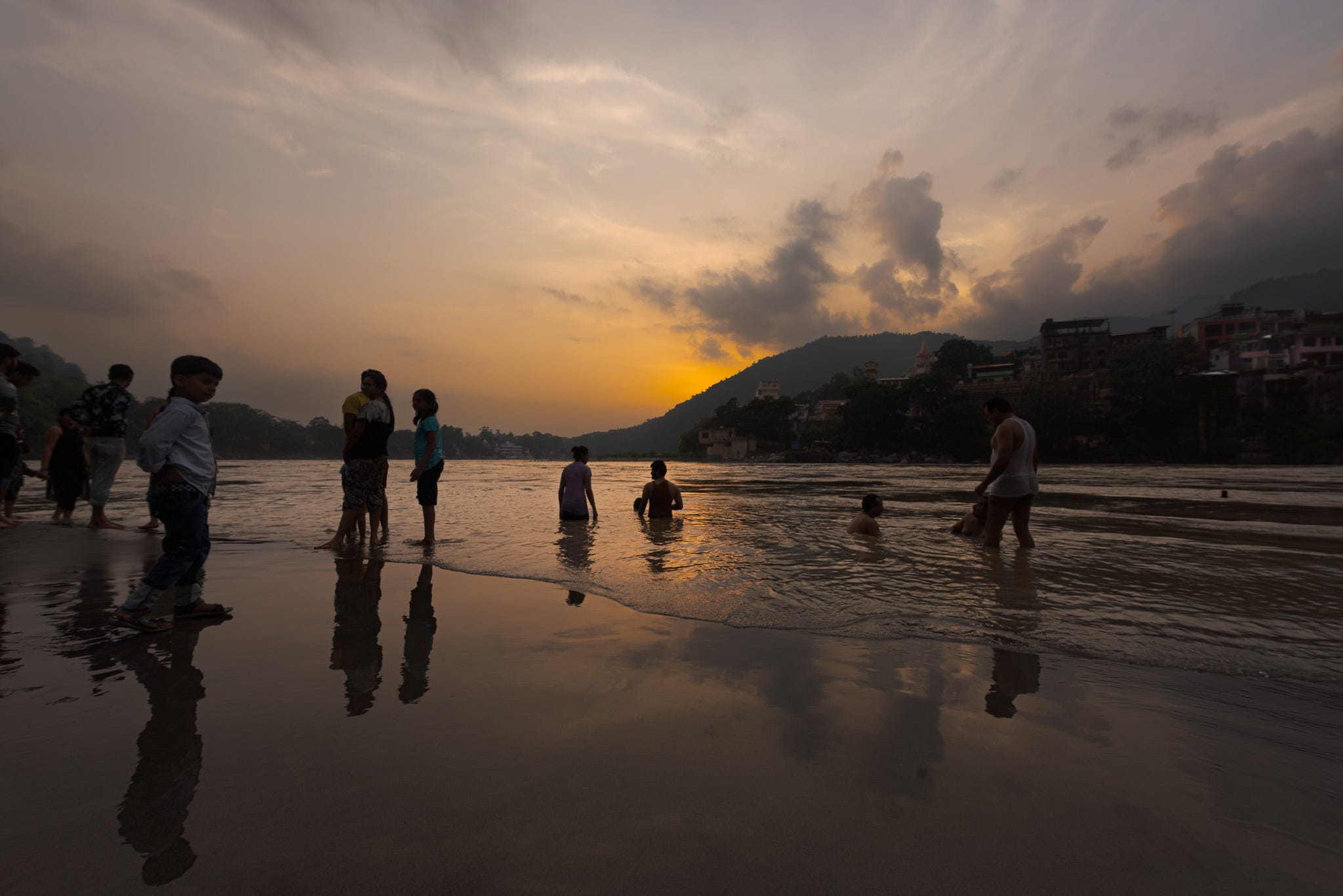
Sunset creates magic in Rishikesh, whether you are on the side where the ashrams line the river, or on the other side where commercial establishments line the riverbank. I took my camera and tripod to both sides. When you are on the ashram side of the river, you will see the sun going down and, as the sun goes down, the sky’s color changes, as does that of the river. There is a different visual symphony daily, and it does not pay to be cynical.
This last paragraph reminds me of the conversation I eavesdropped on in Simla many years ago. As the young bride gushed about the sunset, her pot-bellied, cynical Sikh husband cast a weary, cynical eye at the setting sun and replied thus: “So what? We get the same sunset in Ludhiana daily.”
Do not copy the Sikh gentleman’s behavior!
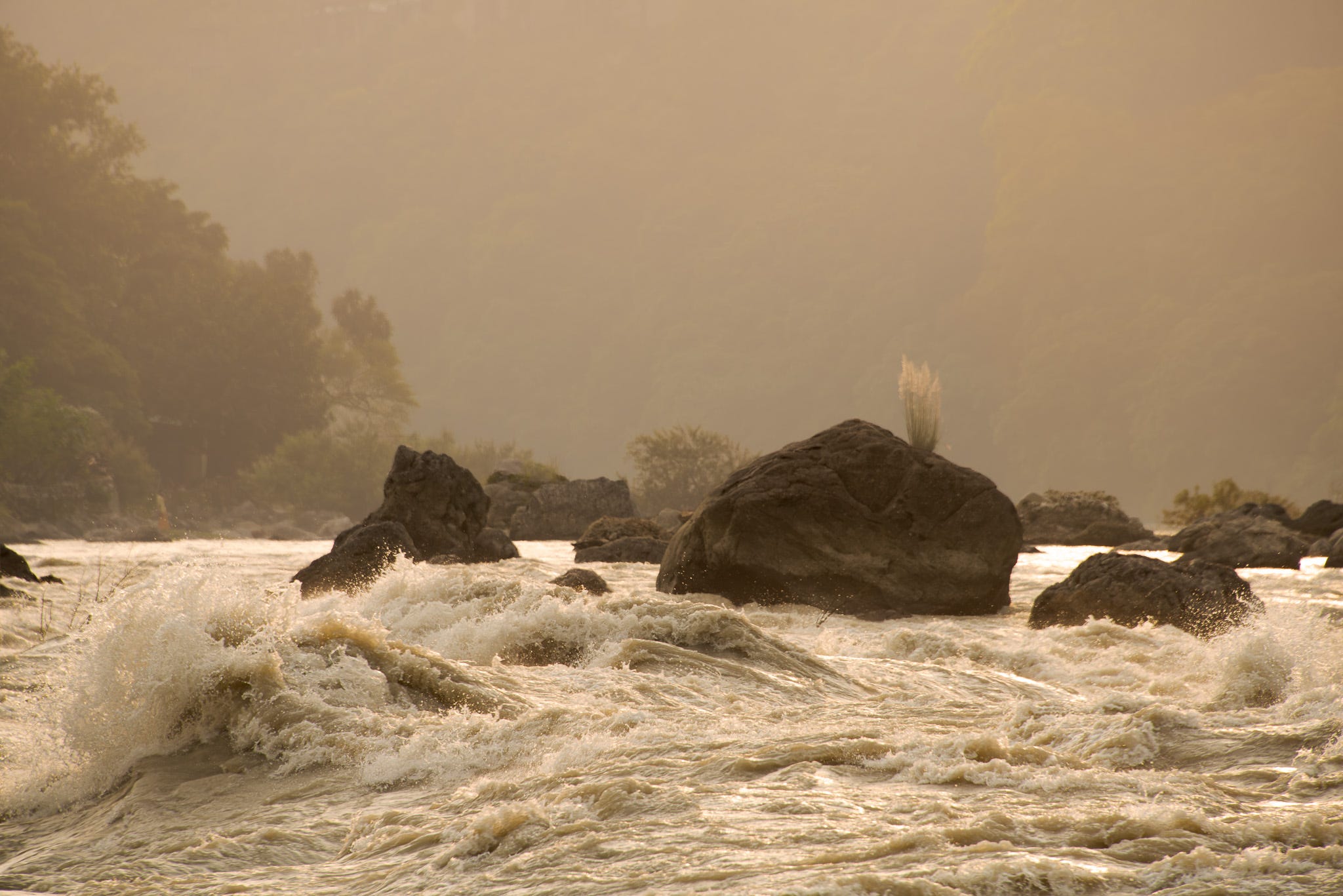
I photographed the rock in the river from the ‘commercial side’ of the river. You may now understand why, in my last post, I mentioned that if you decide to swim in the center of the river’s flow, nothing much will be left of your remains.
I must return to the humid weather. It was so humid in August that year that I could not bear to wear the T-shirts I had brought, so I bought a few cheap kurtas emblazoned with dramatic celestial designs. They cost me a dollar each, but the quality was awful, and the red dye they used to color the kurta transferred to my chest and stomach. After a few days, shades of red, green, and blue fought for primacy on my torso, and I managed to get it off only a few days after I returned home.
On our last evening, we stopped to eat dinner at a restaurant. I was thirsty, and the humidity had squeezed every drop of moisture out of my body, so I ordered five bottles of water and drank them down in ten minutes. We were in an air-conditioned restaurant, so I spent the rest of the evening running to the toilet.
Water in, pee out.
Parmarth Ashram
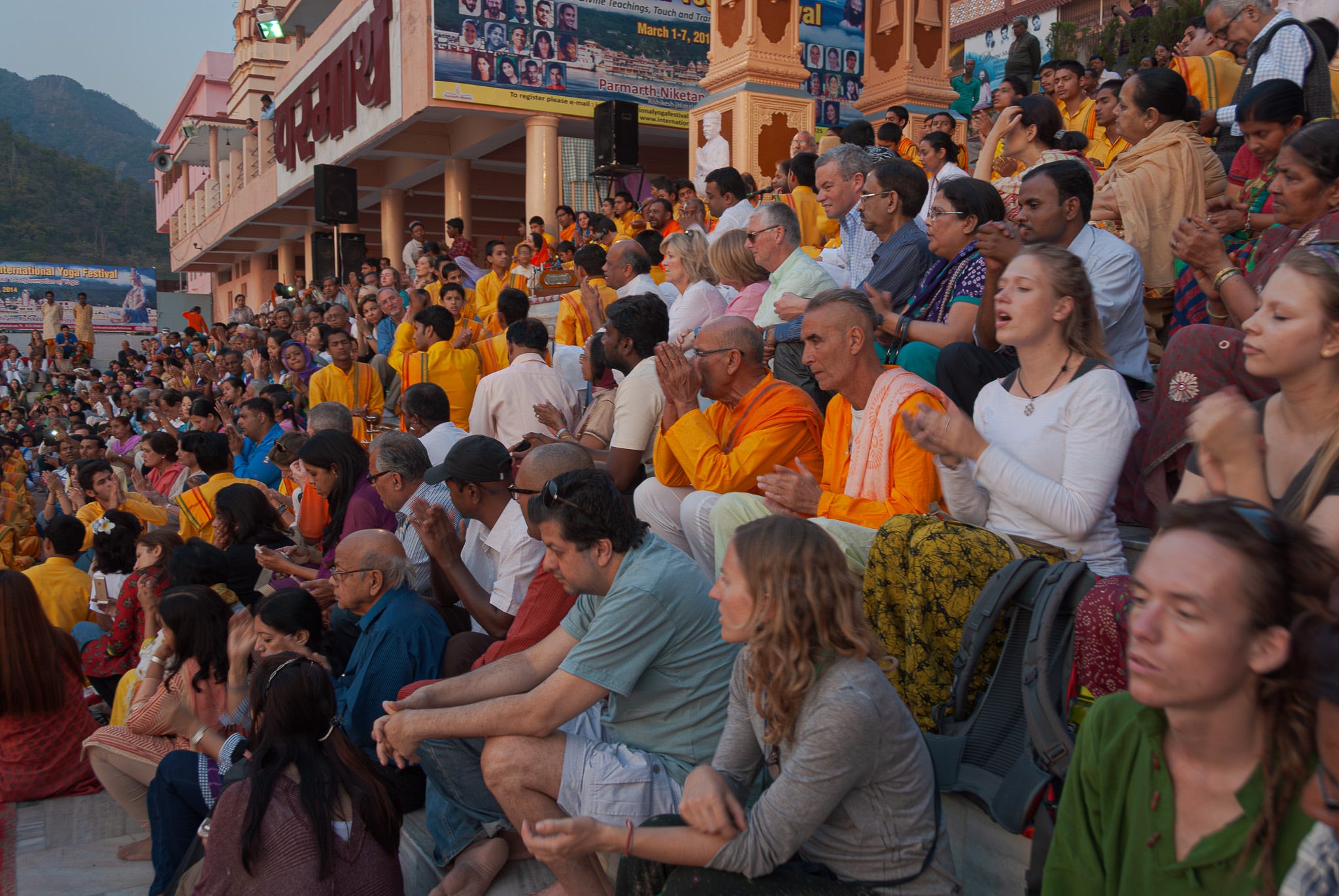
I will conclude with a brief discussion of the Parmarth Ashram. The Ashram is also big on yoga, and they run an international yoga festival annually, in March. I attended the evening prayers once, and it is fancy without being over-the-top, unlike the prayer ceremonies in Benares. People – white and brown – sat on the steps while the priest conducted the prayers. The evening breeze was cool, and I sat on the steps after the prayer, enjoying the sunset. I had immersed my father’s ashes at the Parmarth Ashram’s ghat. After the immersion ceremony, I had lunch at the ashram, a simple vegetarian fare. The menu was simple, and we sat on the ground and ate. On a subsequent visit, I may stay at the Ashram for a few days. I expect simple living. The simplicity should not fool you: while the ashram’s spirit and simplicity are impeccable, the ashram authorities know they attract well-off people, so they ensure the premises and their ceremonies are impeccable. The rich don’t stay in the Ashram. Most of them cannot squat, so they arrive in droves from the Ananda Spa and return to their luxurious retreat, cleansed of guilt and free to sin again.
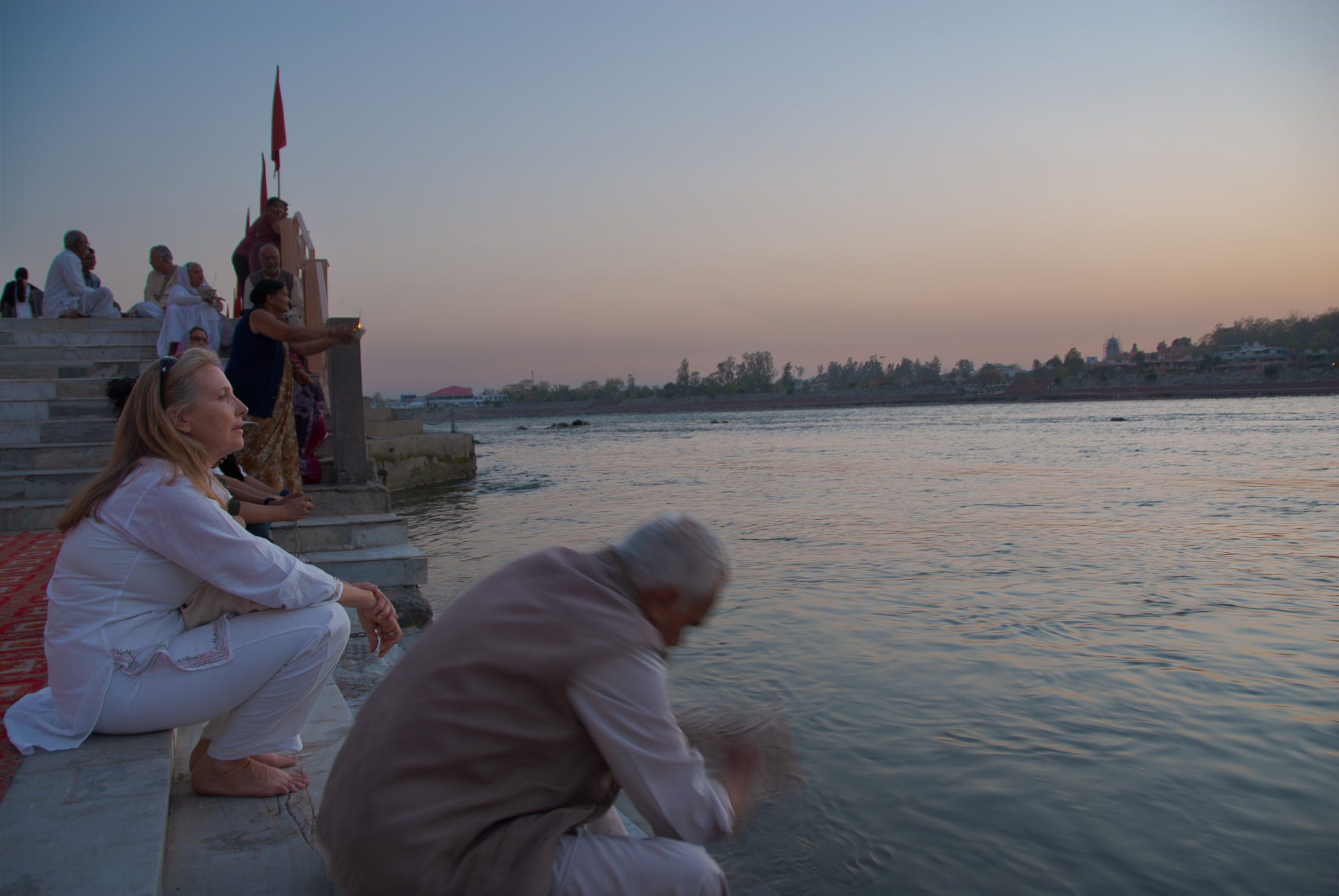
Someone may ask me a pertinent question: what are the tourist sights in Rishikesh? There are none. Or, there were none. What do you do in Rishikesh? Unless the authorities have made a mess, you enjoy the town’s and the river’s spirit.
We are unused to walking, enjoying the breeze, the shady paths bordered by tall trees. Modernity demands that frenetic activity must be integral to our existence.
In the 1960s, Donovan sang a song, ‘Slow Down World,’ and he enjoined us to chill out a bit, to breathe, and to enjoy the simple pleasures the world offers us.
Rishikesh reminds you that life can be slow, easy, and enjoyable. Rishikesh reminds you to chill out a bit, to breathe, and to participate in life’s slow rhythms.
If you’d like to support my work, click this link or, the button.
https://www.paypal.com/webapps/billing/plans/subscribe?plan_id=P-0L800047NY940524GNHY3RRI

Never visited Rishikesh... hope to visit one day 🙏 some amazing pics!