
Wandering in Rishikesh: Part One
While I plan my next trip, it's good to look back on old journeys.

I will restrict my nostalgia to two posts.
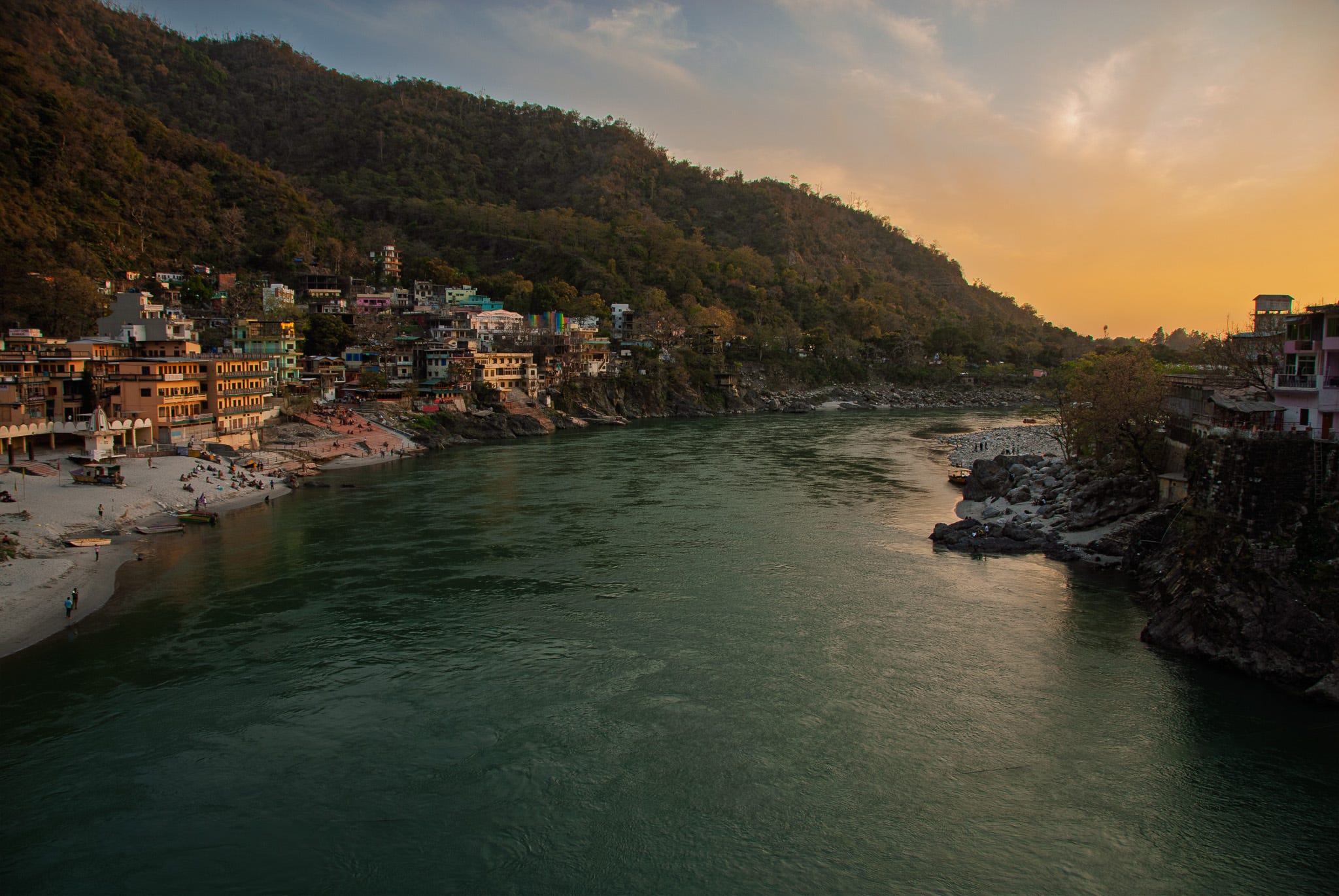
I won’t spend weeks and weeks gassing about my various trips to Rishikesh, so I will combine my impressions into two blog posts and then move on to another place until I “return” to the town. This statement reminds me to write a few blog posts about my recent trip to Benares, which I will do soon.
I can’t say I remember exactly whether my first trips after my corporate career ended were to Benares or Rishikesh, but I remember that these were the first towns I visited. My corporate career went up in a corporate political mushroom cloud, and I remember the anger boiling inside me when I visited Haridwar and Rishikesh. Anger can be corrosive, and my fury set me back by two years. I kept bouncing between consulting and photography until one day I dropped all pretenses of becoming a grand consultant and focused on photography (now also video), writing, and teaching.
The short-lived life of “My Camera & My Chai.”
It was perhaps on the second afternoon that my friend and I walked along one of the shaded paths as the river flowed beside us. We stood probably about fifty or sixty meters (200 feet) above the riverbed, and we stopped for chai at a little chai stall. The two of us sat in the shade of the trees; the river water babbled as it flowed towards Haridwar; the breeze was cool, even in April. Then I placed my camera on the table next to my glass of chai, took a photograph, and chatted with my buddy while eavesdropping on the other people having chai.
Life can be good.
I remember starting a blog called “My Camera & My Chai,” which I intended to be a humorous, sarcastic view on life, and for now, it exists in the deep recesses of my mind. Maybe I will change one section on “Tramping” to “My Camera & My Chai.” We shall see.
Lakshman and Ram Jhula
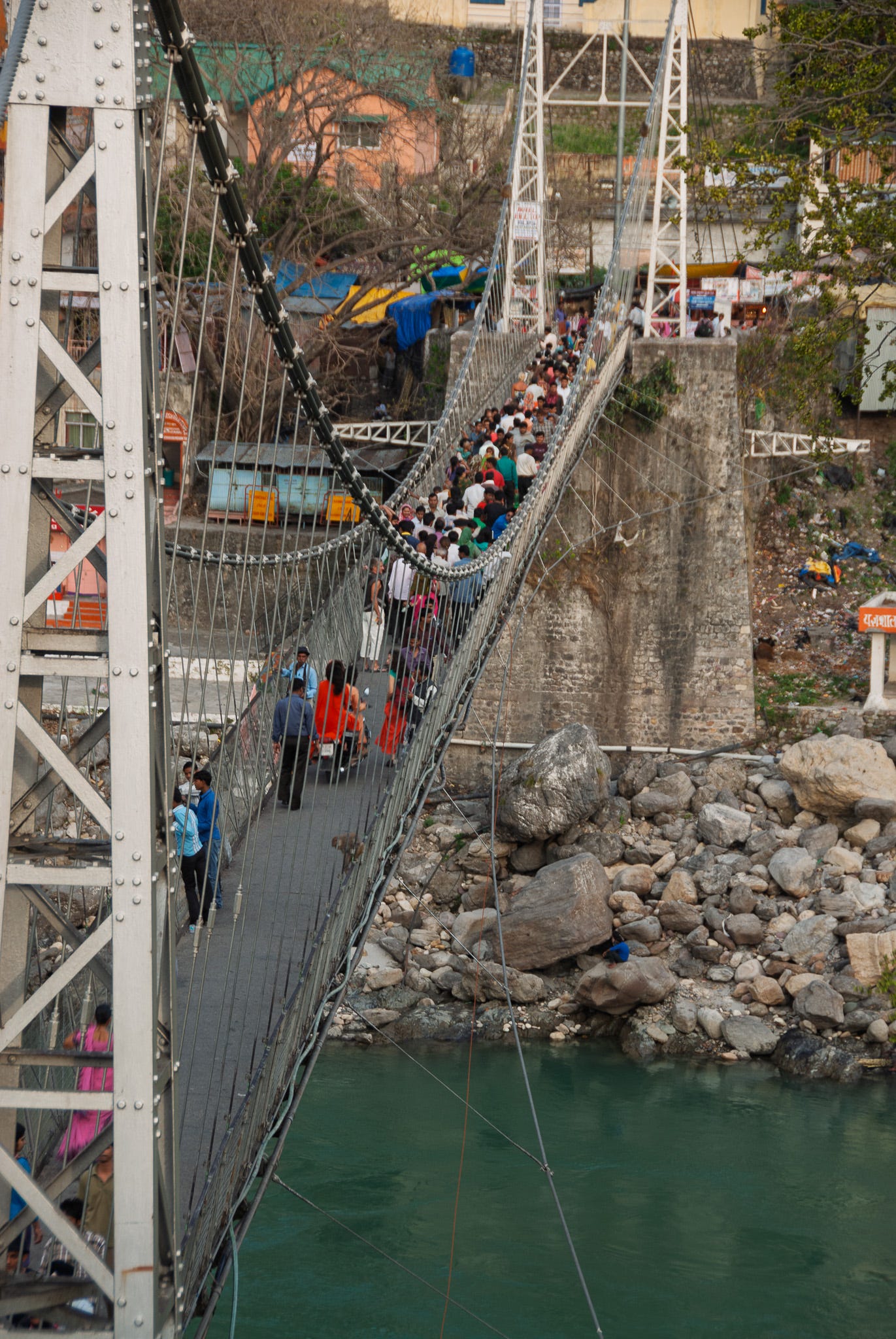
(The Lakshman Jhula, above).
There are three ways to cross the river. If you start at the end closest to the mountains, you can cross via the motorable bridge. Then, coming into the town, you have a suspension bridge called “Lakshman Jhula,” constructed in 1918 CE or thereabouts. The word ‘jhula’ means ‘swing,’ and as you walk along the narrow bridge, you must pick your way through the crowds. People walking, taking selfies, shooting photos, people squatting, people on two-wheelers, and cows all jostle for space. The bridge sways as you walk across it.
I love walking along the bridge when the sun is going down, and looking ‘down,’ away from the mountains towards Haridwar. The sun lights up the sky and casts mesmerizing reflections on the water, as boats become silhouettes. Trust me, I am not being romantic! Photography is difficult on the bridge. While photography is not overly difficult, it is challenging in the fading light, especially as the bridge keeps swaying and people keep bumping you around.
I was using my Nikon D200 those days, a fantastic day camera, but cameras weren't very good in low light back then. Still, I think I got some decent photos, which I was happy with.
Rishikesh is a vegetarian town, and the foreigners who flood the streets don’t make a song and dance about missing their beef steak! Our hotel, which the first time was just beyond the municipal limit, so the restaurant served us eggs in the morning, which was great. On another trip, we smuggled eggs into the hotel–an absolutely cheap hotel–and bribed one of the young workers to boil eggs for our breakfast. On that occasion, it was a real challenge to dispose of the eggshells. Since my friend had bought and cared for the eggs on the journey to Rishikesh, it became my duty to walk through the pouring monsoon rain to the town’s border to dispose of the shells.
I doubt I would have the courage to smuggle in the eggs in today’s charged right-wing culture. A bunch of right-wing hooligans would probably accost me, accuse me of insulting Indian gods, and of being anti-national. These people are jobless, insecure, full of misdirected anger, and violent. Sometimes you need to follow the practice of the angels who refuse to follow in the path of fools.
As you approach the Haridwar end of Rishikesh, you encounter the second suspension bridge–the Ram Jhula. I prefer the Lakshman Jhula, and I have no logical reason for it. I just do.
Shops, little hotels, and hostels dot the streets on the left side of the river, if you are facing the mountains. Temples and ashrams dot the right side, and you will find the Beatles Ashram on the right.
I don’t know about the current situation, but the town had absolutely no decent restaurants, and on our first visit, the only decent place to eat was the hotel we stayed in. One guest was a gorgeous Frenchwoman, so the two of us were happy! Our second hotel was awful, and we had no choice but to stay there. My buddy had booked an Airbnb, but our hostess had disappeared from town without warning. The rain was so heavy that I could hardly see where I was driving, and we finally got a room in a tiny hotel. The hotel was so cheap that our expenses for the entire trip were only 100 US dollars per person, which included fuel, accommodation, and food!
The hotel was on a sloping road, and the water streaming down the road seemed to be an angry river. I parked, unloaded my companion and our luggage, parked my car in the public parking, rolled my jeans up, and walked barefoot to the hotel. How else would I remember that hotel?
It’s a simple life.


Most people congregate by the riverside in the evening. Some bathe in the water; others meditate. Some chant; others sit and contemplate the sun as it goes down, lighting the sky and the water. One person, as you see, stood on the riverside one evening, swinging a rope around his head, chanting something. Everyone, brown and white, blends into the town’s landscape, creating a new composite culture.
I only have a problem with the few ‘German Bakeries,’ where Westerners congregate. The Westerners don’t mess around–they are not those obnoxious Israelis–but the restaurant staff always seemed to resent serving anyone with brown skin. I cannot count the number of times I have quelled the desire to catch them by the scruff of their necks and dump them in the river. Of course, it would have been an impossible task, but the desire was always strong, and I always enjoyed the visuals my brain conjured.
Despite the irritating and subservient behavior of my fellow citizens, I’ve always preferred Rishikesh to Haridwar. But hey, when I reflect on their behavior, I understand why it was so easy to colonize us!