

I continue to be an oblivious fool, like many around me.
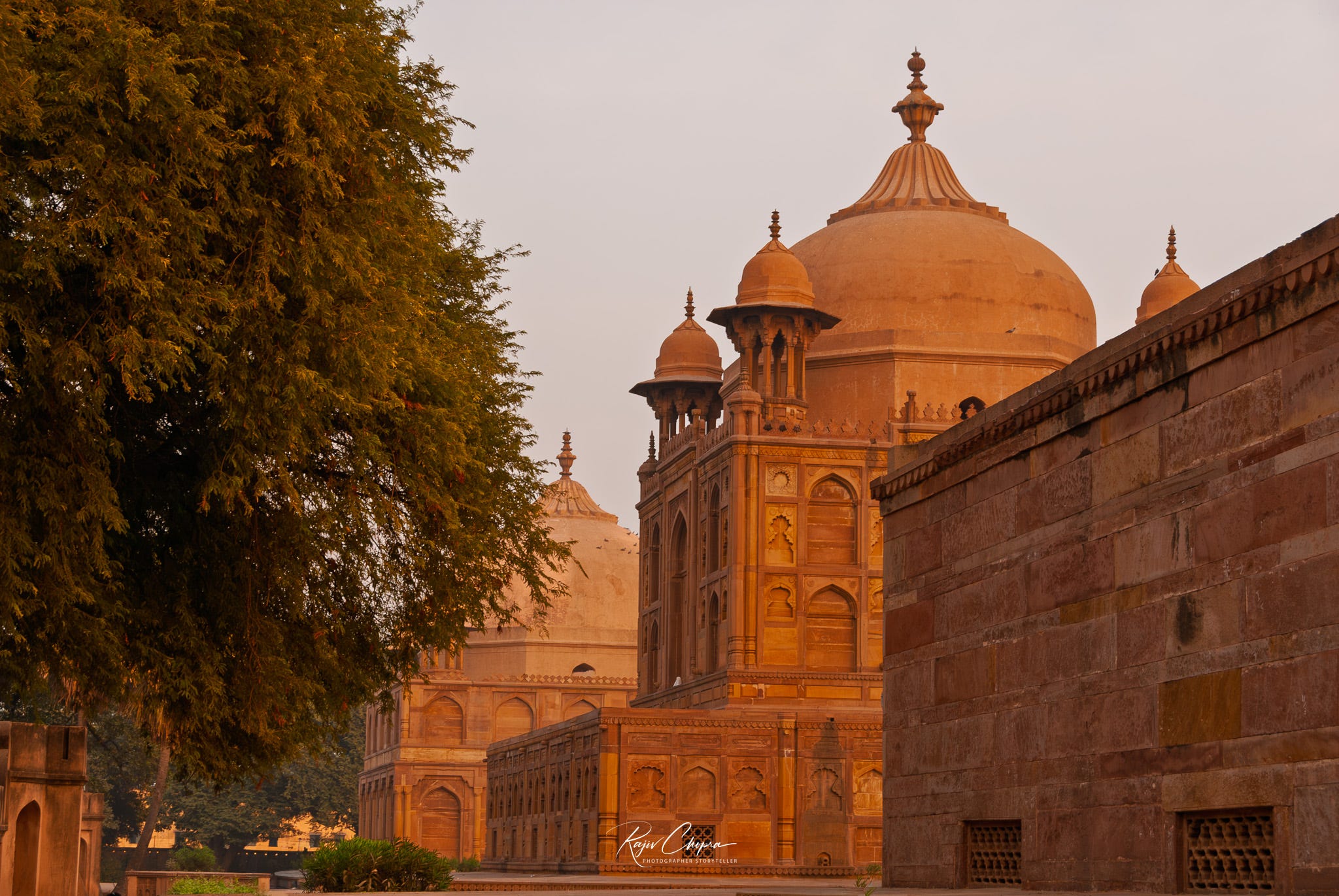
I will continue confessing my obliviousness to everything but the work at hand. I have mentioned that I had been to Allahabad several times, yet I never once stopped to research the city’s history. My continued failure always prevents me from pointing the gun at people, yelling, “Ignorant fool!! You should be ashamed of not studying your country’s or city’s history.” I must point the gun at myself first.
We stayed at a horrible hotel on my last visit to Allahabad. The hotel’s only saving grace was its proximity to the train station, but it was far from decent eating places. The hotel’s food was inedible to the point of choking us the one time we sampled its horrendous fare, and we only consumed the stale toast and tepid tea they served for breakfast.
Khusrau Bagh
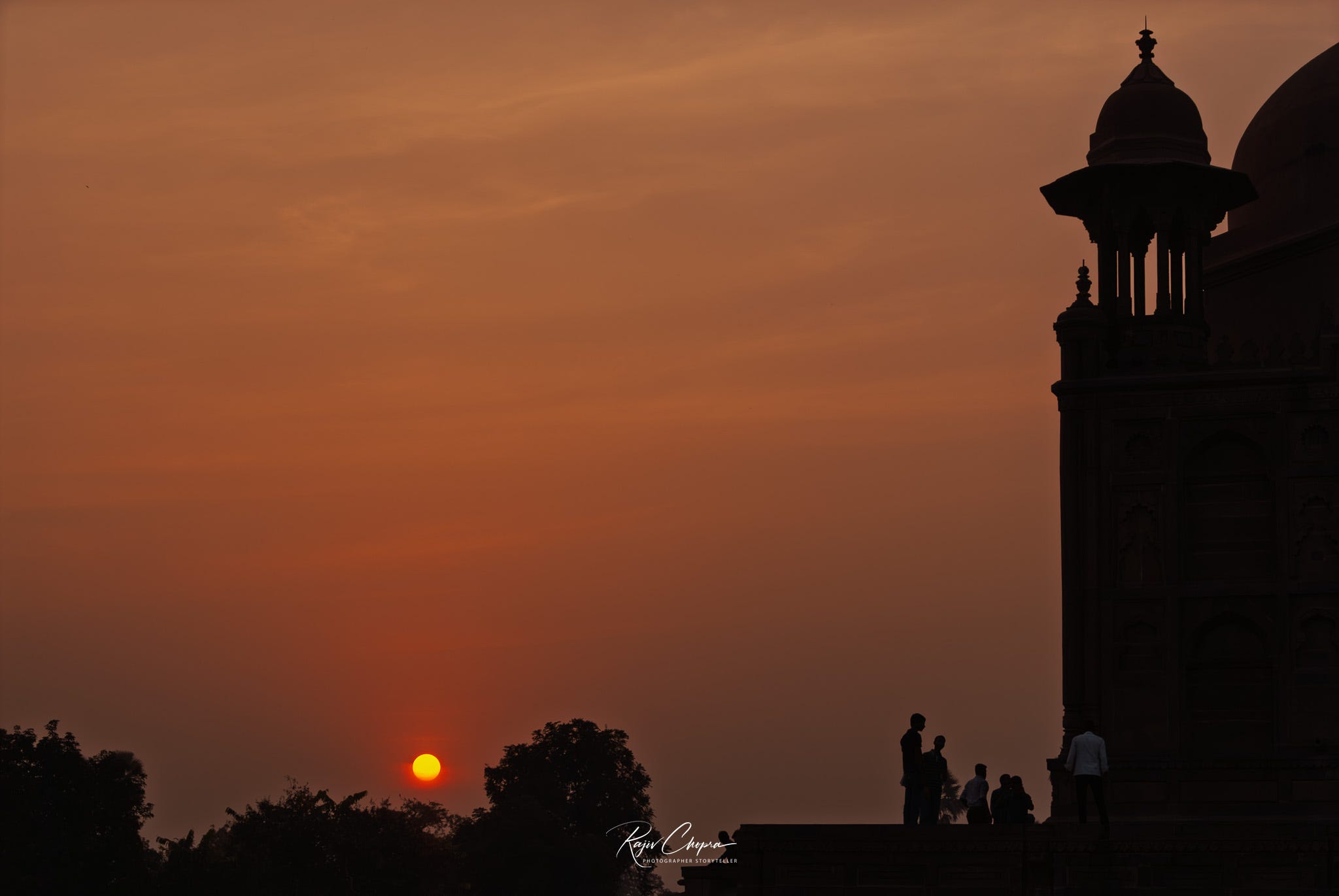
On our last evening, I discovered the hotel had one more saving grace: its proximity to Khusrau Bagh. I remember we were both tired and disheveled when we returned to the hotel on the last evening, and only the rickshaw driver’s strong recommendation and its proximity to our hotel got us out of bed to visit Khusrau Bagh.
We arrived at sunset, which is probably appropriate. I didn’t know who Khusrau was until I read the brief description as I entered the premises. It is easy for me to criticize all my fellow Indians and berate them for their ignorance. Still, if I pause and allow myself a spot of kindness, I acknowledge that, just within Indian history, there is much I will never know.
I will narrow my focus in the coming years.
I have decided to focus my future trips on Punjab, Uttaranchal, Himachal Pradesh, Kashmir, and the Northeast India, and will slowly start learning about these regions. This decision forces me to realize that I will remain ignorant about Bengal, Central, and South India.
Our politicians and many citizens believe that Mughal history is the history of the sub-continent, which is ridiculous. True, they dominated many tracts of India, and they dominate our consciousness, but Mughal territory and influence waxed and waned through just 350 years of Indian history.
The three tombs in Khusrau Bagh
Khusrau Bagh has three tombs within the complex. One, the smallest, belongs to Khusrau. There is one empty tomb for his sister, Nithar Begum. Her mausoleum, completed in 1624 CE under her instructions, is now empty. Where is she buried? I don’t believe anyone will investigate the mystery.
Khusrau’s mother, Shah Begum – originally Manbhawati Bai – is buried in the third tomb. Shah Begum committed suicide, distressed by the discord between her son and Jehangir, in 1604 CE, by swallowing too much opium.
Succession wars amongst the Mughal Princes.
While Khusrau’s story is tragic, it marks a distinct flexion point in the succession struggles within the Mughal empire. I will research this topic and have downloaded a lot of material to read, so I will not launch into a lengthy dissertation in this short essay on Khusrau Bagh.
Khusrau Mirza was born in 1587CE to Jehangir and his first wife, Shah Begum. His early years may have put him in a tough spot, because while Akbar doted on Khusrau and considered him to be the heir apparent over his father, Prince Salim (Jehangir), the prince considered himself to be the heir apparent.
Jehangir’s rebellion.
Jehangir, as I mentioned in my last post, rebelled against his father, Akbar, but the two reconciled towards the end, and Jehangir finally became king when his father died in 1605 CE. Akbar did not have to rebel against his father, Humayun, because Humayun died when Akbar was a child. As an adult, Humayun had a fractious relationship with his father, Babur, but it did not lead to a full-blown rebellion.
Humayun and Akbar had complex relationships with their respective brothers, often leading to conflict. While these complicated relationships often lead to military conflict, I found no reference (not yet, anyway) to the two kings competing with their brothers for the throne.
Ya taqt ya tabut
I believe that the battle for succession changed with Prince Salim (Jehangir) and became deadly. The phrase, ‘ya taqt ya tabut,’ took on a literal, menacing aspect. Ever since Akbar stopped the practice of granting the princes their own semi-independent provinces, each had to scramble for power. Each prince had to court courtiers and allies for support, making them consummate politicians. Each prince had to learn to lead armies, making some of them consummate military commanders. The much-maligned Darwinian phrase about survival of the fittest applied to the Mughal princes.
Danial was one of Prince Salim’s brothers and died just before his father, Akbar. While sources do not link Salim with Daniyal’s death, someone laced Daniyal’s opium with lead and other poisons. The timing was too convenient, and Daniyal’s death begs the question – did Salim plot Daniyal’s death?
Khusrau’s rebellion.
When Prince Salim became king in 1605 CE and assumed the honorific title of Jehangir, a miffed Khusrau Mirza rebelled. Jehangir defeated the young prince in 1606 CE and imprisoned him at Khusrau Bagh. When the young prince tried to escape in 1607 CE, the guards captured him, and Jehangir ordered him to be blinded. Jehangir also tortured all Khusrau’s supporters.
Jehangir had another son, Khurram, who also rebelled against his father. Khurram lost many battles and contended with Nur Jahan’s machinations. Nur Jahan, for all her other qualities, was a power-hungry woman who wanted her daughter, Mehrun Nisa Khannam (better known as Ladli, from Nur Jahan’s first marriage), to become queen.
When Khurram became king.
Ladli was a pawn in Nur Jahan’s politicking and lust for power. Nur Jhan first tried to arrange for Ladli to marry Khusrau, but he refused. Then Nur Jahan attempted to persuade Khurram to marry Ladli, but he refused. The queen’s third attempt was successful, and Ladli married Shehryar Mirza, another half-brother of Khurram and Khusrau.
In the end, Khurram became king, taking the title Shah Jahan. Shehryar Mirza died, and so did Khusrau. Khusrau Mirza died in the Deccan under mysterious circumstances, and, even though some sources absolve Khurram of the possible death of Khusrau, it seems evident that Khurram plotted Khusrau’s death.
Was Aurangzeb the only one who committed fratricide? No.
Our history books teach us to hate Aurangzeb, and our teachers often characterize him as a bloodthirsty prince who killed his three brothers and imprisoned his father, Shah Jahan. Our teachers frequently referred to Shah Jahan in glowing terms, almost making him seem like the god of love for building the Taj Mahal.
My teachers ignored, or were ignorant of, the drama of the succession battles that unfolded over the first almost two centuries of Mughal rule.
Was Aurangzeb the bloodthirsty tyrant that politicians, ignorant civilians, and school history teachers depict, or was he following a tradition started by his ancestor, Jehangir?
Consider the following history as I understand the sequence of events.
Babur: I don’t have much information on him yet.
Humayun had a fractious relationship with his father, Babur, and many conflicts with his brothers, but there was no bloodshed.
Akbar: Humayun died when he was young. He had conflicts with his brothers, but no bloodshed.
Jehangir: rebelled against his father, Akbar; may have killed his brother, Daniyal; imprisoned and blinded his son, Khusrau.
Shah Jahan: rebelled against his father, Jehangir; may have killed his brother Khusrau.
Aurangzeb: rebelled against, ousted, and imprisoned his father, Shah Jahan; killed his three brothers; imprisoned his son and his favorite daughter for rebelling against him.
The history became progressively bloody, but the bloodshed started with Jehangir.
Survival of the fittest. Did the world lose much knowledge, though?
Some say that the Mughal practice of not guaranteeing the throne to the firstborn resulted in needless bloodshed and fratricidal war. Others believe this tradition ensured that the Mughal princes developed the necessary abilities for kingship as they struggled for power. The Mughals laid considerable emphasis on education. I will now quote from Munis D. Faruqui’s book, ‘The Princes of the Mughal Empire – 1505 – 1719.’ He mentions Aurangzeb’s fury when he learned that one of his sons, Kam Baksh, had been neglecting his studies.
He said, ‘A person without knowledge (bi-ilm) is a beast (haiwan).’ Aurangzeb then quarantined his son in his quarters for a month.
The succession battles between brothers may have created the best king to rule, but, considering the erudition of the Mughal princes, can we also wonder if the world’s pool of knowledge became shallower in the process? Darah Shikoh, Aurangzeb’s eldest brother, had a vast personal library. Dara’s old library at Ambedkar College in Delhi now houses the Delhi Partition Museum.
Final speculations: glory and obscurity.
If Khusrau had become king, or if Dara Shikoh had become king, how would the trajectory of the Mughal Empire have changed? Idle speculation.
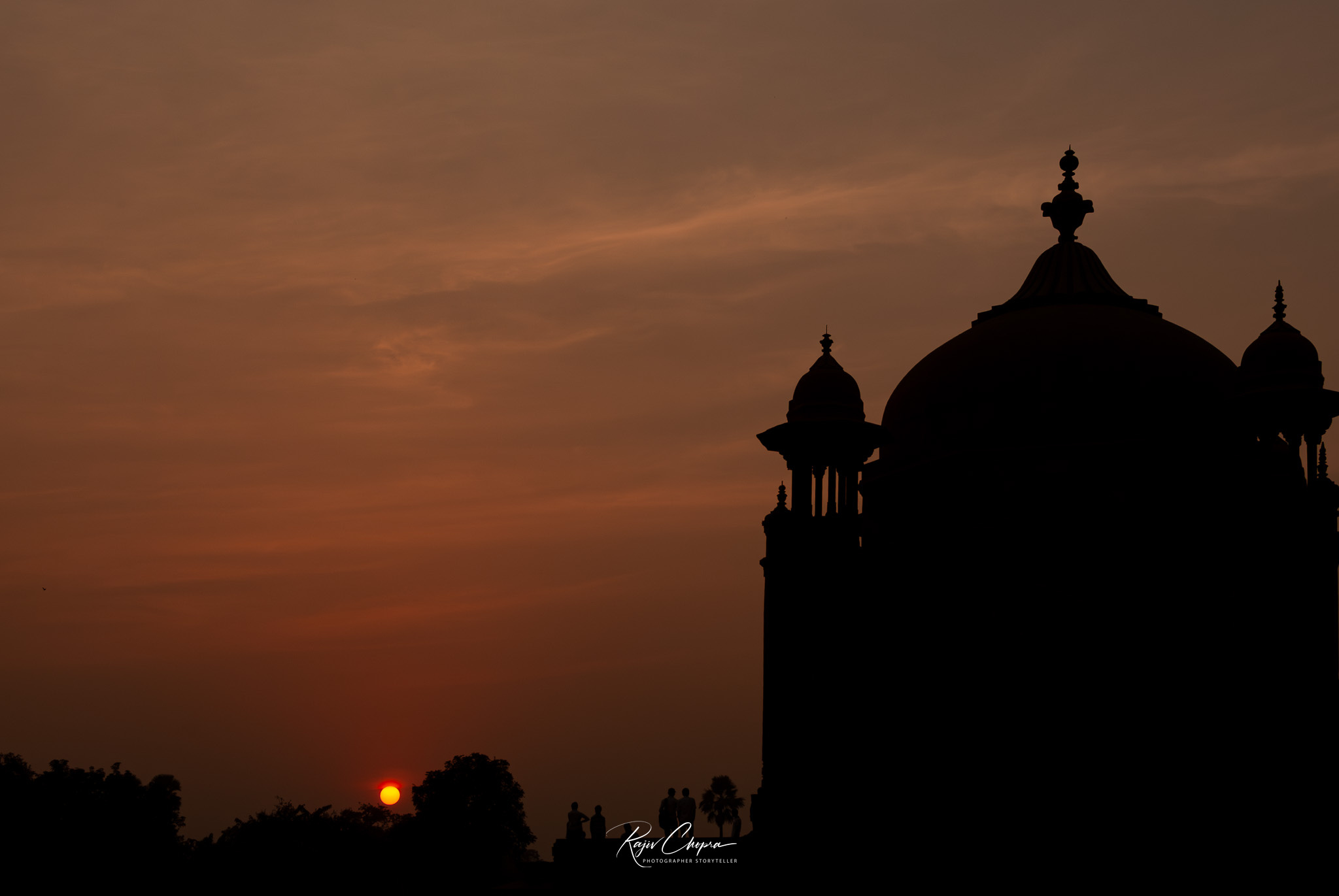
When I visited Khusrau Bagh and watched the sun go down over the tombs of the dead royals, I remember speculating on the lives of those who lived, fought, and lost the war. History only remembers the victors, often cloaks them in robes of gold, consigning the losers – even if they were worthy individuals – to dull obscurity.
The princes who lost the succession war lost more than their lives: they also lost their rightful place in history, and only a few historians care to study their lives and their struggles.
When do you die? You die when humanity loses all memory of you. Maybe there is life in the old princes, yet.

This is a good discussion of Mughal succession and competition and how much of the infighting was fierce. Am glad the hotel's proximity to Khusrau Bagh was so close as to somewhat slightly make up for hotel's distopian cuisine.