

This post will be brief.
I’ll keep this post brief, with little more than my first impressions. I'll have time for this later. After the nerve-wracking experience of smashing the lady’s pipe, wondering if I’d get lynched for my near-crime, and my friend’s abrupt act of treason by hopping out of the car and standing behind the crowd, I decided I needed sustenance.
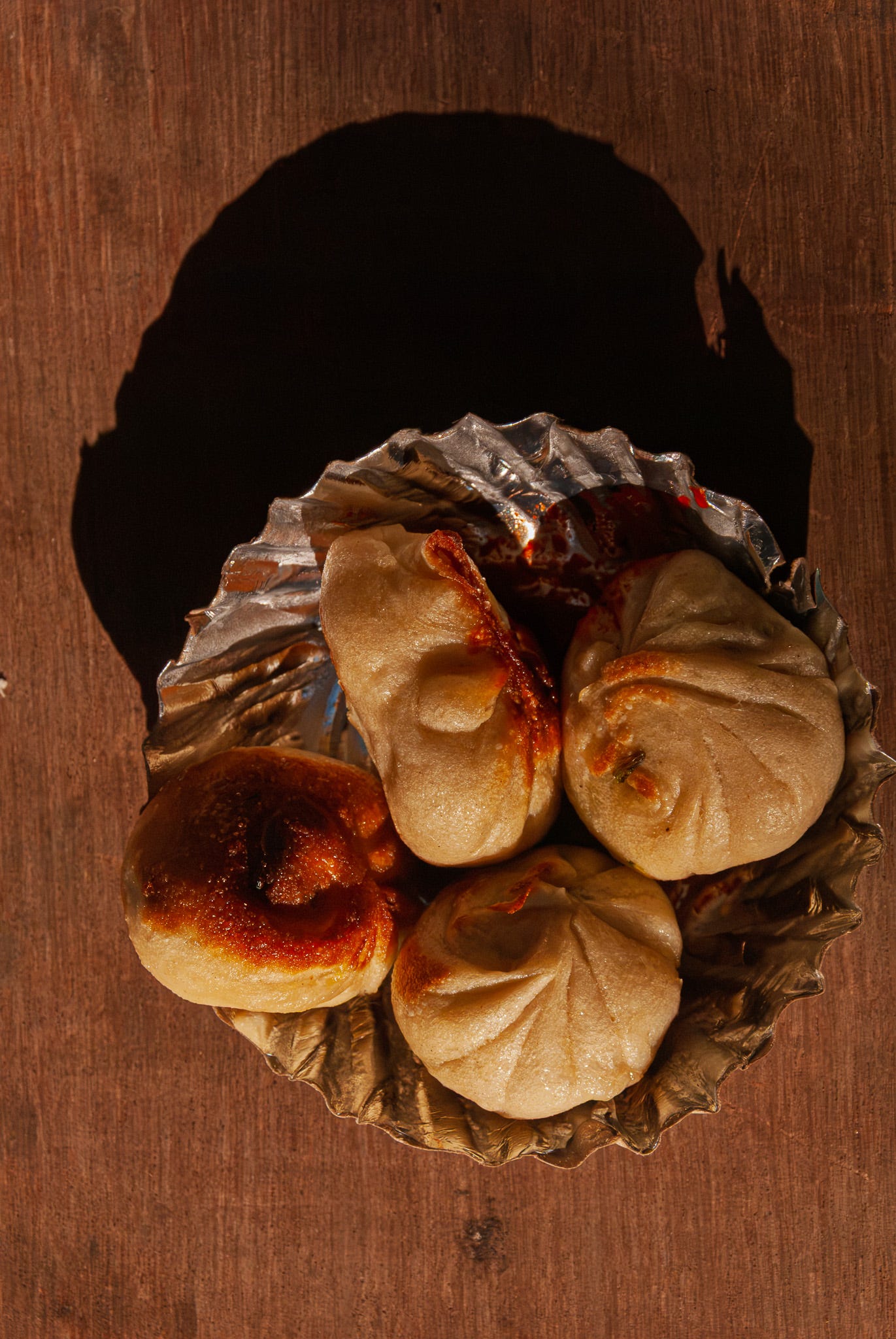
I needed rum, and the two of us walked up to the market, where I managed to convince the owner to keep the shop open long enough for me to buy a half bottle of ‘Old Monk’ rum. The restaurants were closing for the night, so we walked across to a stall selling momos. These were spicy, fried momos, exactly what the doctor had told me to eat on a cold winter night after a good day’s drive. I gobbled a few plates of momos, and the world felt right again. To paraphrase Bertie Wooster, the earth rotated around its own axis and revolved around the sun as it should.
An old shop still stood in the main market. Established by a Parsi gentleman named Nowrojee in 1860, it may have passed to a non-Parsi family since then.
It is unusual to find a Parsi establishment in a place like McLeod Ganj. Most Parsis live in Gujarat, Bombay, Poona, and other parts of India. Parsis are Zoroastrians who practice sky burial and worship fire. They fled Persia after the Safavid Dynasty fell, and many settled in Gujarat. The story goes that the king promised them sanctuary if they learned the local language and blended into local culture.
The Parsis.
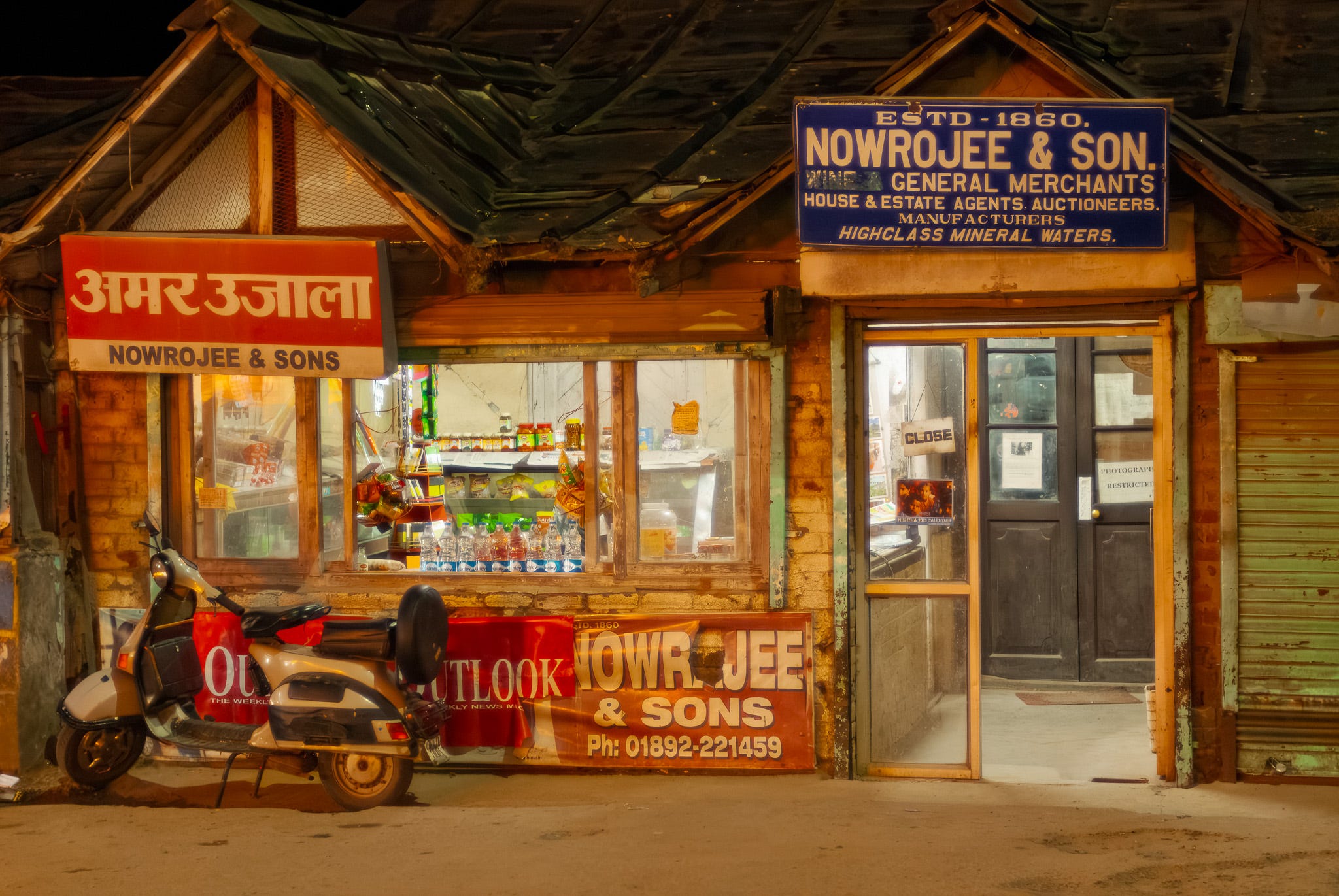
So, beyond Persian influence in our music, language, food, and clothing, we also have a subset of Persians who have lived in India for centuries. The Parsis are a tiny community, but their impact on India has been massive in industry (the Tata Group, the Godrej Group, etc.), philanthropy, and food. Yes, we also celebrate Parsi New Year. If you are familiar with Bombay or Poona, you’re familiar with the Irani restaurants that dot the urban landscape. I’ve had my share of happy meals at an Irani café. Hopping into an Irani café at dawn and asking the usually irascible owner for chai, scrambled eggs, and their special bread was always a joyful experience. But I shall write about them later.
Those days, McLeod Ganj’s restaurants shut by 8 pm, barring one in the main market. The absence of tourists compelled the restaurants to shut early, but they stay open late during long weekends and during the summer holidays, when the good citizens of Ludhiana, Hoshiarpur, Jallandhar, etc., drive up, fill the air with their cacophonous Punjabi pop music, stagger along the roads and eat their fill.
The nightlife hidden behind the quiet nights.
The town is peaceful in December, but we discovered that the calm hides a lively nightlife. The local Tibetans arrange private parties. While reading Chinmay Tumbe’s book, “India Moving,” I discovered that most of them have not obtained Indian passports. Doing so will rob them of the benefits they receive as refugees, even though many have been here for almost half a century.
Madikeri, in Kodagu, South India, also has a huge Tibetan community. My friend decided he’d try to gatecrash these parties, and I am glad he was unsuccessful. The locals told me that the Tibetan men guard their women with a jealous fanaticism and can become violent if they sense anyone is about to lay a lascivious paw on them. Fair enough. I was glad my friend didn’t trace even a single party, because I didn’t want to get dragged into a conflict I didn’t choose.
He’d wander the lanes at night, and I’d get into bed with a glass of rum and water and a book. I remember regretting not bringing my Kindle because the room’s lighting was terrible. Why do hoteliers want to ruin their guests’ eyes?
Breakfast in the market.
We alternated breakfast between a market restaurant and our hotel. Neither served breakfast before 8 am. I remember cribbing about their tardiness, but in hindsight, they were onto something I missed. Unless you need to be out at 4 am to photograph the blue and golden hours, why rush? The clock rules us and shares our attention with social media. We rush from appointment to appointment, from place to place, and even when we don’t need to, we have become accustomed to wearing a harried face and acting as though we are in great demand.
You see this in people’s agitation at traffic signals and our tendency to break the law. What is so urgent that you can’t wait 15 seconds for the light to turn green?
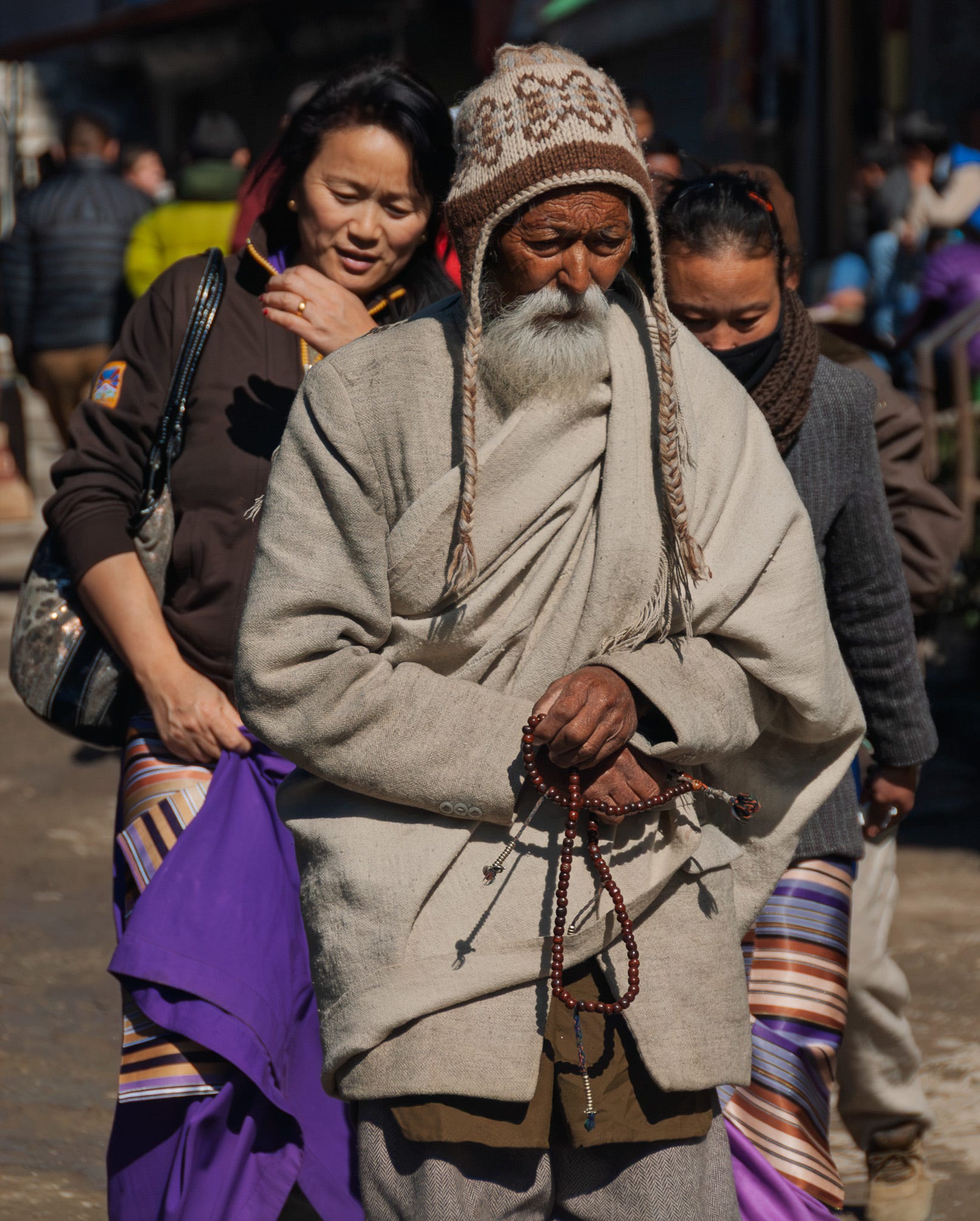
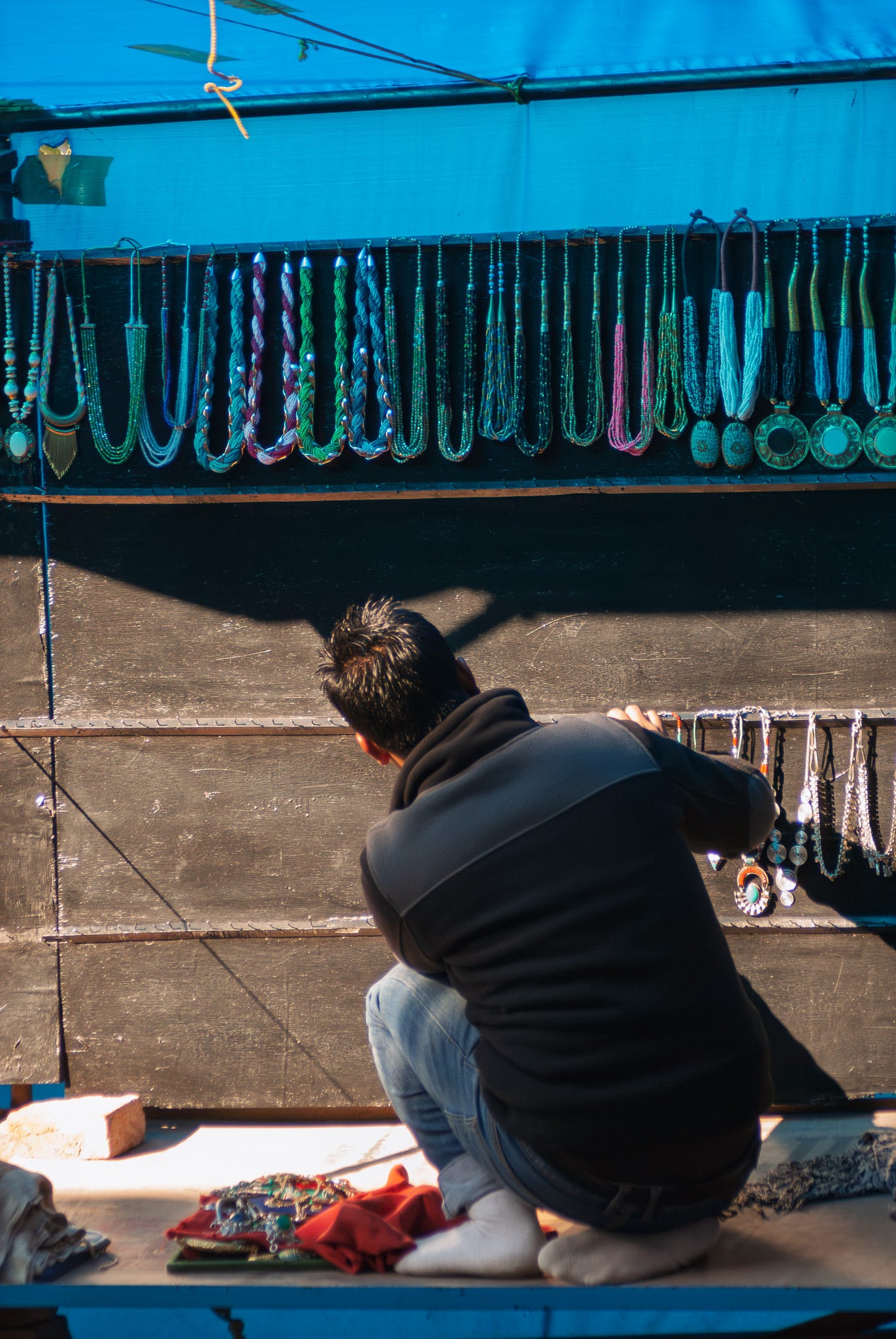
So, after the first day, I settled into the easy pace of McLeod Ganj. When I ate at the hotel, I put my phone away and gazed into the mountains stretching before me. At my favorite restaurant, I’d eat at an outdoor table, enjoy the winter sun, and watch Tibetans set up their stalls or walk up and down the road.
Daytime temperatures were just below freezing, and while I love cold weather, I made sure I wore one layer of woolens. A westerner offended my sensibilities when he marched past me wearing a thin, half-sleeved T-shirt. If I were a dark wizard, I’d have cast a spell to compel him to wear five layers of woolens. But I am not a dark wizard, so he walked past in his offensive, thin, maroon, half-sleeved T-shirt. Yes, I remember the color of his T-shirt!
Tibetans and Tibetan culture dominate the town. Tibetans and the original inhabitants seem to have found a happy balance and live together peacefully, but my subsequent research suggests that not everything is as it seems. Disputes often bubble beneath the surface and then explode, leaving everyone standing in wonder; when they do, jingoism replaces common sense.
Tibetan graffiti fills the town, or it did when I was in McLeod Ganj. Some of the graffiti features Tibetan symbolism, and some is protest art. They don’t protest the Indian government or people: we have given them a home and continue to do so, despite the Chinese government’s discomfort. They protest what is happening in Tibet, and they have every right to do so. Many were born in India, and while some claim to miss their ancestral home in Tibet, I doubt they’d want to return, even if everything returned to normal.
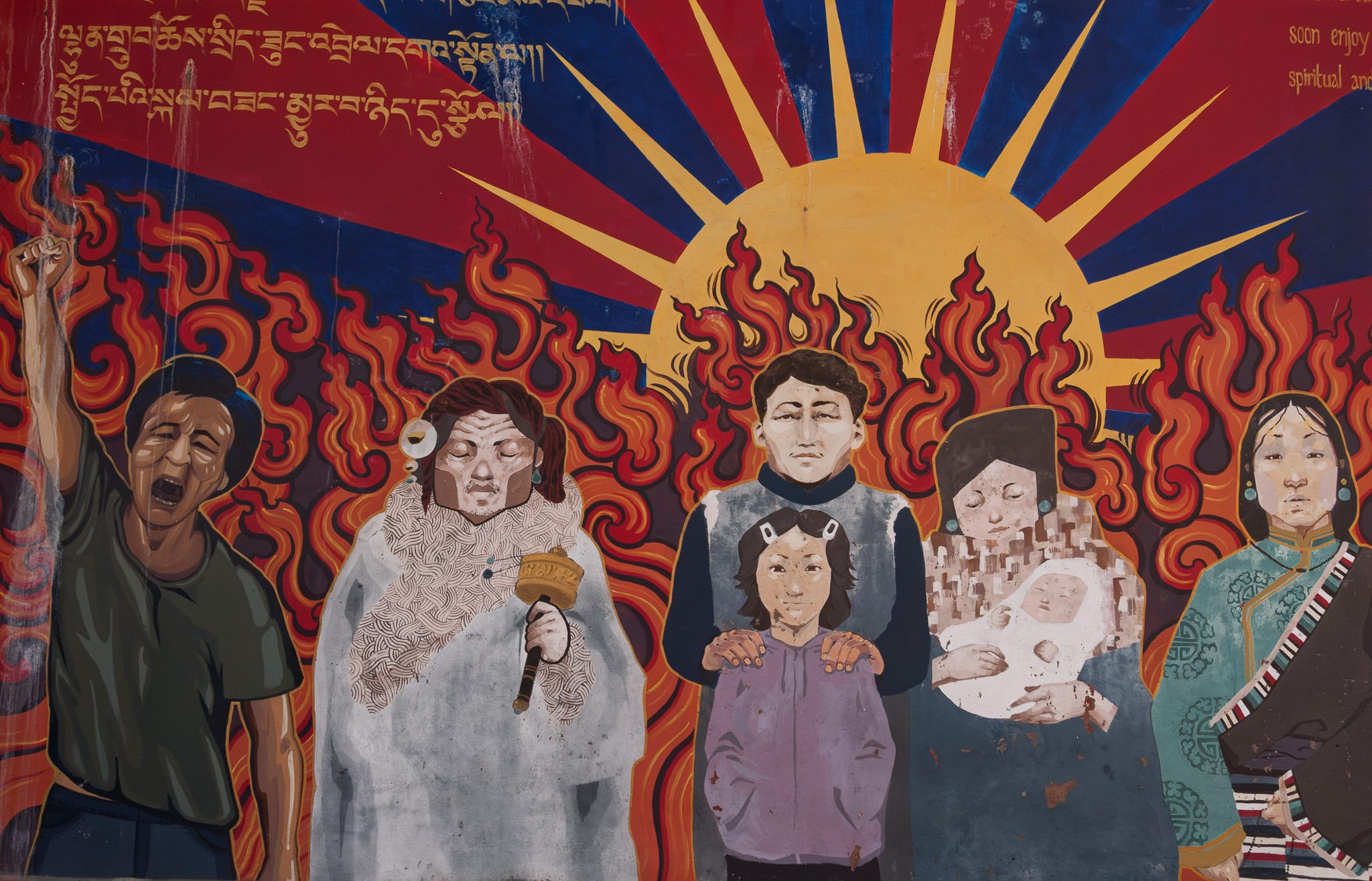
For instance, I have an emotional bond with my parents’ ancestral homes in West Punjab, but I have no desire to live there. My home is here, and everything in my parents’ hometowns has changed.
In the shadow of the Dauladhar mountains.
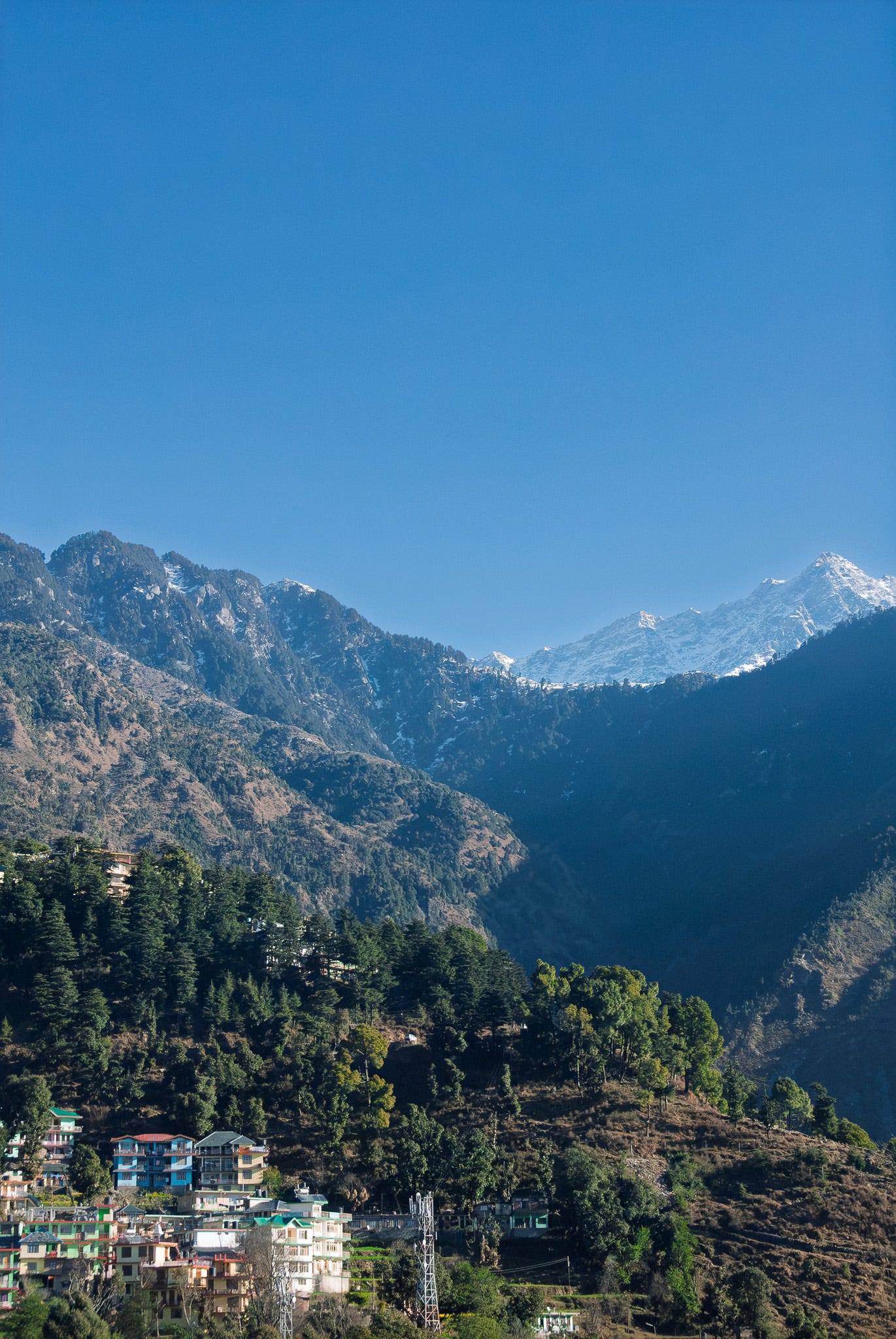
The Dauladhar range forms the backdrop to the town’s landscape. The sky was crystal clear and blue, with fresh air and twinkling snow-capped mountains in the distance. That was several years ago, and when I saw photos a student took, he traveled there the last week of December, as did I; I noticed the snow had disappeared. I’d like to say that the snow had retreated, but that would be a lie. When he traveled there last year, the snow had disappeared from the mountain peaks. It is impossible to say whether this was a bad year; the bare mountains are yet another grim reminder of the harm we are doing to our planet.
The term ‘homo sapiens’ means ‘wise man’ or ‘thinking man.’ We are neither wise nor do we think, and when we do think, we do not think well.
McLeod Ganj is a small town, and we stayed in a small hotel about a kilometer downhill from the main marketplace. I remember passing a five-star hotel while driving to one of the town’s scenic spots. These are retreats for the rich who want to visit such towns without dirtying their feet exploring the local culture. Yet they have little respect for the region’s ecology.
The Assam government has reduced the area reserved for other animal species in Kaziranga National Park to build five-star hotels and casinos.
My advice: visit places like McLeod Ganj before neoliberals destroy them!


